What the research shows
- Studied for insulin sensitivity
- Studied for diet-induced weight gain
- Exercise raised natural muscle levels 11.9-fold
Published study results for the compound, not results from this product. For research use only.
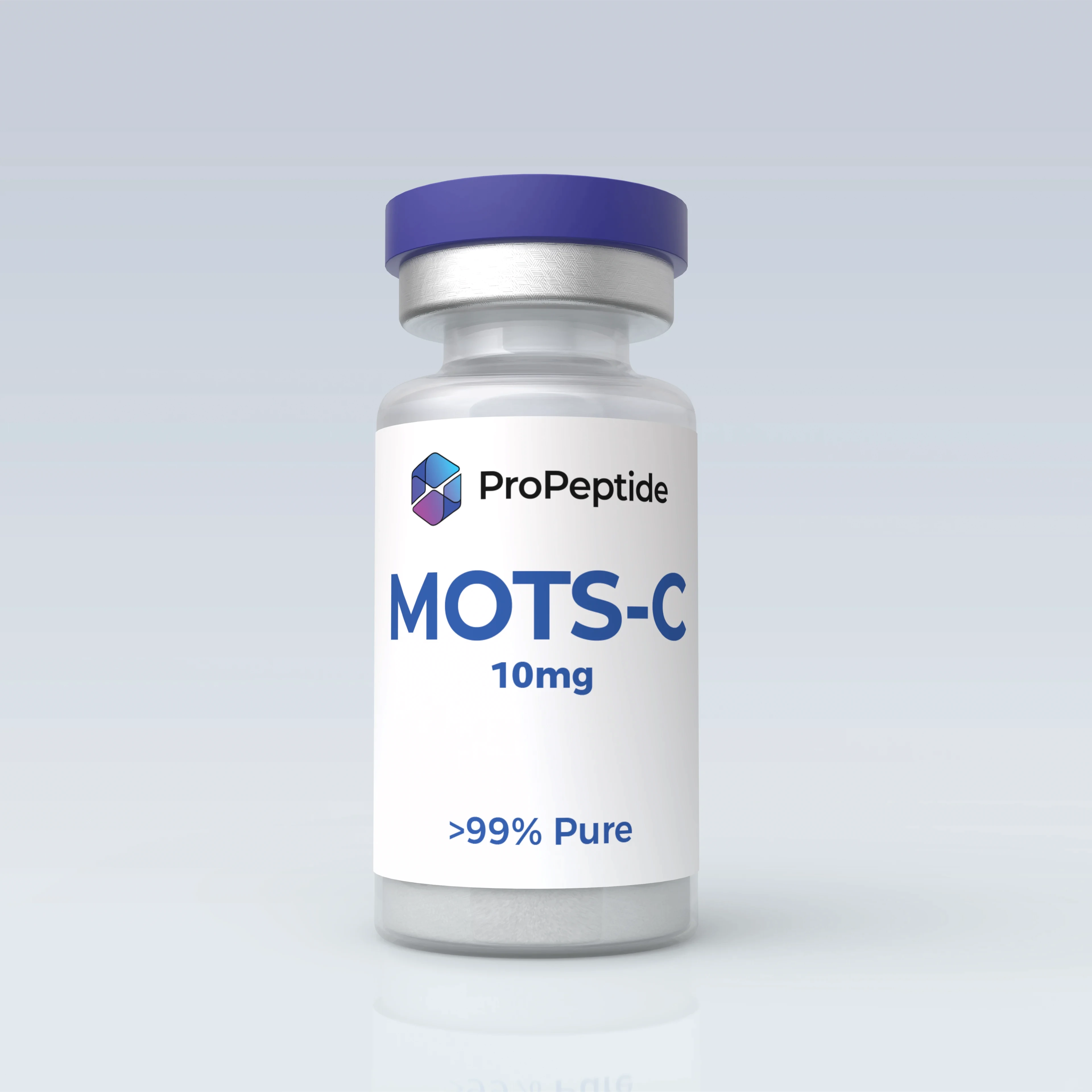
MOTS-c 10mg research vial from Remy Research: a 16-residue peptide encoded in mitochondrial DNA, studied in cell and mouse models of AMPK signalling and glucose handling. Lyophilised, ≥99% HPLC line standard. For research use only. Not for human or veterinary use.
- ≥99% Purity
- ProPeptide Brand Standard
- Same-Day Delivery
- Dubai
- Lyophilized Vial
- Research Format
- Storage Guidance
- Follow Package Label
- 1x ProPeptide research vial (lyophilized powder)
- Cold-chain insulated packaging
ProPeptide Lyophilized Vial Research Format
SpecsMOTS-C 10mg Vial
Studied for metabolism and physical capacity
AED 260 / vial
Choose your bundle
Minimum order is AED 400
25% off orders of AED 700+ with code KV25 at checkout
Order before 4 PM for same-day Dubai delivery.
UAE delivery: AED 50 below AED 1,000; free from AED 1,000
Specified ≥99% ProPeptide Brand Standard
- Sold by
- Remy Research
- Brand
- ProPeptide
- Manufacturer
- ProPeptide
- Tested by
- Line standard — no independent report
Ships from Dubai
MOTS-c at a Glance: A Peptide Made by Mitochondria
MOTS-c is short for "mitochondrial open reading frame of the 12S rRNA type-c". Unlike almost every peptide in a research catalogue, its code sits in mitochondrial DNA rather than in the cell nucleus. The 16-residue sequence is MRWQEMGYIFYPRKLR.
A University of Southern California group led by Changhan Lee and Pinchas Cohen described it in *Cell Metabolism* in 2015. That paper helped establish a small family of mitochondrial-derived peptides (MDPs), which also includes humanin and the SHLP peptides. Researchers treat these molecules as messages sent from mitochondria to the rest of the cell, a direction of traffic usually called retrograde signalling.
Most of what is known comes from cell culture and rodents. Human studies so far measure the body's own circulating MOTS-c, which tends to be lower in older people and in type 2 diabetes cohorts and rises after endurance exercise. No peer-reviewed trial giving MOTS-c to people has been published, so human data are limited.
Remy Research supplies this 10mg vial as lyophilised material for in-vitro and animal-model laboratory work. For research use only. Not for human or veterinary use. The full literature review is on our MOTS-c research profile.
What You Receive with This Research Vial
A short summary of the format, documentation and handling behind the ProPeptide-labelled MOTS-c 10mg vial sold by Remy Research.
Lyophilised powder in a sealed vial
The peptide ships as a freeze-dried solid in a crimp-sealed glass vial, the usual format for laboratory storage and handling of short peptides.
Stated purity standard
The line is specified to a ≥99% HPLC standard. HPLC shows how clean a sample is; mass spectrometry is what confirms identity, and a good certificate reports both.
Honest batch documentation
Remy Research publishes batch-specific reports in the lab results library. Check there for coverage of this product before you order; we do not claim a published batch report where none exists.
Cold-chain delivery across the UAE
Every shipment travels in cold-chain packaging held between 2–8°C. Dubai orders placed before 4 PM go out same day, and most arrive within 4 hours. The other six emirates get next-day delivery when you order before 12 PM (noon).
Research framing, no shortcuts
We describe what the published studies report and where the evidence stops. We do not offer medical advice, and nothing on this page suggests a personal or clinical benefit.
Technical Specifications
| Manufacturer | ProPeptide |
|---|---|
| Compound | MOTS-C (Mitochondrial Open Reading Frame of the 12S rRNA-c) |
| CAS Number | 1627580-64-6 |
| Quantity | 10mg per vial |
| Format | Lyophilized powder, sealed glass vial |
| Purity | Specified ≥99% |
| Molecular Weight | 2,174.5 Da |
| Sequence | Met-Arg-Trp-Gln-Glu-Met-Gly-Tyr-Ile-Phe-Tyr-Pro-Arg-Lys-Leu-Arg (16 amino acids) |
| Encoded by | Mitochondrial 12S rRNA. One of the first identified mitochondria-derived peptides (MDPs), alongside the humanin family |
| Class | Mitochondria-derived peptide (MDP), exercise mimetic |
| Storage | +2 to +8°C lyophilized. |
| Shelf Life | 24 months from manufacture, lyophilized and sealed |
Mechanism: What the Published Studies Describe
Three lines of evidence recur in the MOTS-c literature. All of them come mainly from cell and rodent work.
Folate pathway, AICAR and AMPK
The 2015 Lee et al. paper reported that MOTS-c interferes with the folate-methionine pathway in skeletal muscle. That shift lets AICAR build up, and AICAR switches on AMP-activated protein kinase (AMPK), the enzyme cells use to sense their energy state. When AMPK signalling was knocked out, the reported metabolic effects disappeared.
Glucose handling in mouse models
In mice fed a high-fat diet, MOTS-c treatment was reported to improve glucose tolerance, raise glucose uptake in skeletal muscle and limit diet-induced weight gain and insulin resistance. These are animal findings and have not been tested in a published human trial.
Moving into the nucleus under stress
A 2018 *Cell Metabolism* study from the same group found that MOTS-c travels from the mitochondria into the nucleus when cells are starved of glucose or under oxidative stress. There it was linked to NRF2 and to changes in the expression of antioxidant and metabolic genes.
Exercise and ageing signals
A 2021 *Nature Communications* paper reported that MOTS-c levels rise in human muscle with exercise and that treating older mice improved their physical capacity. Lower circulating levels with age are an association in people, not proof of an effect.
MOTS-c Compared with SS-31
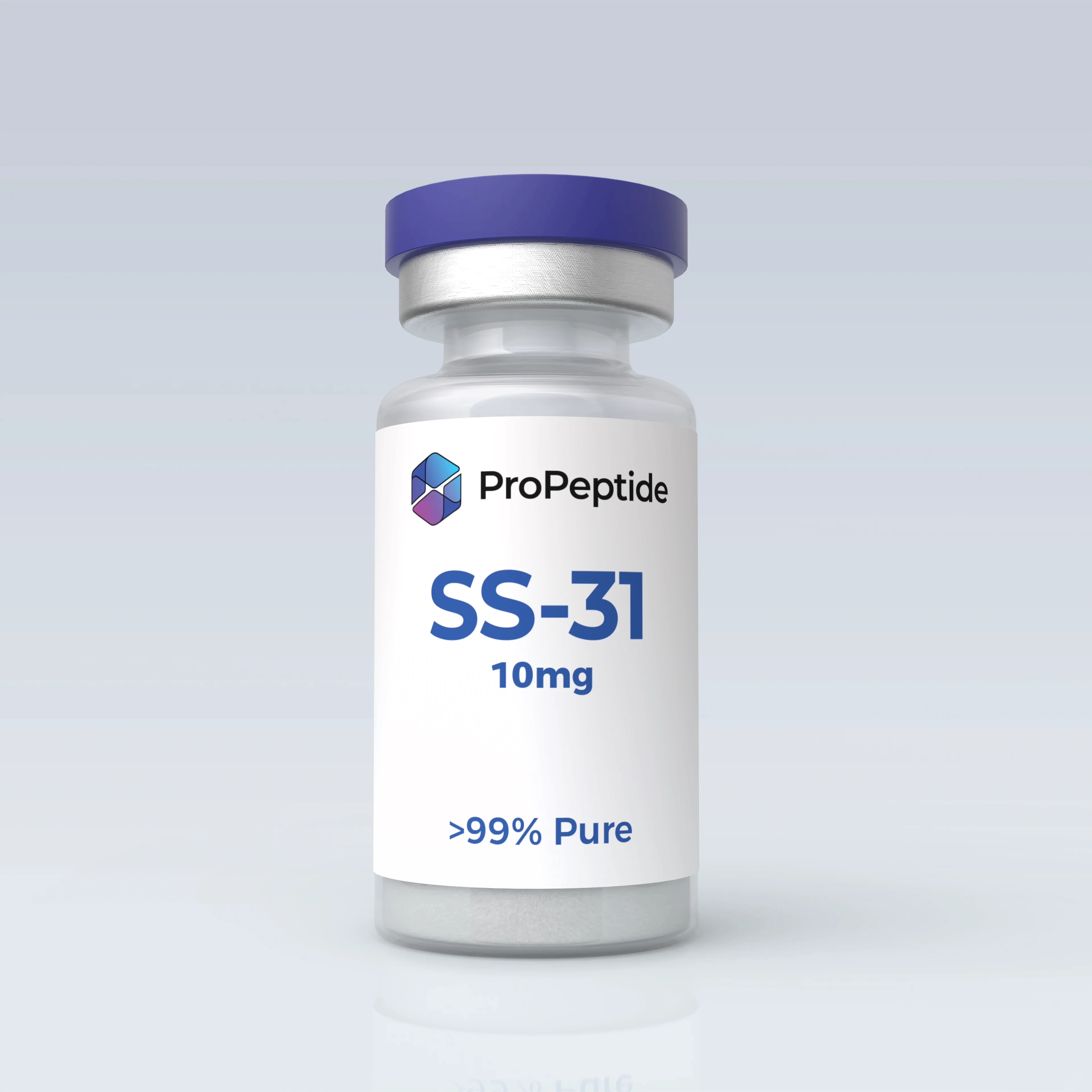
MOTS-c is often grouped loosely with other "mitochondrial" peptides, but the research questions differ. MOTS-c is studied as a metabolic signal: AMPK activity, glucose uptake and stress-driven gene expression. SS-31 (elamipretide) is a synthetic tetrapeptide studied for binding cardiolipin in the inner mitochondrial membrane, with endpoints such as cristae structure and electron-transport efficiency.
SS-31 also has a longer record of clinical-development literature, while MOTS-c remains largely preclinical. Pick the compound that matches the endpoint you plan to measure. Our MOTS-c vs SS-31 comparison covers this in depth, and the SS-31 10mg vial is listed separately.
| MOTS-c | SS-31 | |
|---|---|---|
| Origin | Encoded in mitochondrial 12S rRNA | Synthetic Szeto-Schiller peptide |
| Length | 16 amino acids | 4 amino acids |
| Main research focus | AMPK, glucose metabolism, retrograde signalling | Cardiolipin, membrane structure, ROS |
| Evidence base | Mostly cell and rodent studies | Preclinical plus clinical-development literature |
For research purposes only. Not for human consumption.
Frequently Asked Questions
Where can I buy MOTS-c in Dubai?
Remy Research lists this ProPeptide MOTS-c 10mg vial for laboratory research, along with a MOTS-c 20mg pen. Dubai orders placed before 4 PM are delivered the same day, with most arriving within 4 hours. For the other emirates, orders received before 12 PM (noon) arrive the next day; anything placed after noon arrive within two days, Saturday orders arrive on Monday, and there is no Sunday delivery outside Dubai. The delivery charge is AED 50 on orders below AED 1,000, and orders of AED 1,000 or more ship free. All shipments use cold-chain packaging held between 2–8°C. Supplied for research use only, not for human or veterinary use.
Do you deliver to every emirate?
Yes. Same-day delivery covers Dubai, and Abu Dhabi, Sharjah, Ajman, Umm Al Quwain, Ras Al Khaimah and Fujairah receive next-day delivery on orders placed before noon.
What is MOTS-c?
A 16-amino-acid peptide coded in mitochondrial DNA (sequence MRWQEMGYIFYPRKLR), first characterised in 2015. It belongs to the mitochondrial-derived peptide family alongside humanin.
What does the research on MOTS-c show?
In mouse studies it was linked to AMPK activation, better glucose tolerance and less diet-induced insulin resistance, and to improved physical capacity in older animals. Human studies only measure natural blood levels. No peer-reviewed trial of MOTS-c in people has been published.
Is there a batch certificate for this vial?
The line is made to a ≥99% HPLC standard. Published batch-specific reports are kept in our lab results library; check there for current coverage of MOTS-c before ordering.
How should the vial be stored?
Keep the sealed lyophilised vial refrigerated at 2–8°C, protected from light, until it is used in the laboratory.
Is MOTS-c the same as a GLP-1 peptide?
No. GLP-1-class compounds act on gut-hormone receptors. MOTS-c is studied for mitochondrial signalling through AMPK and has no published human efficacy data.
Is MOTS-c intended for human use?
No. Remy Research supplies it for in-vitro and animal-model laboratory research only. It is not a medicine and is not for human or veterinary use.