What the research shows
- Wrinkle volume 55.8% lower than control serum
- Cream improved collagen in 70% of women
- Cream increased skin density in 12 weeks
Published study results for the compound, not results from this product. For research use only.
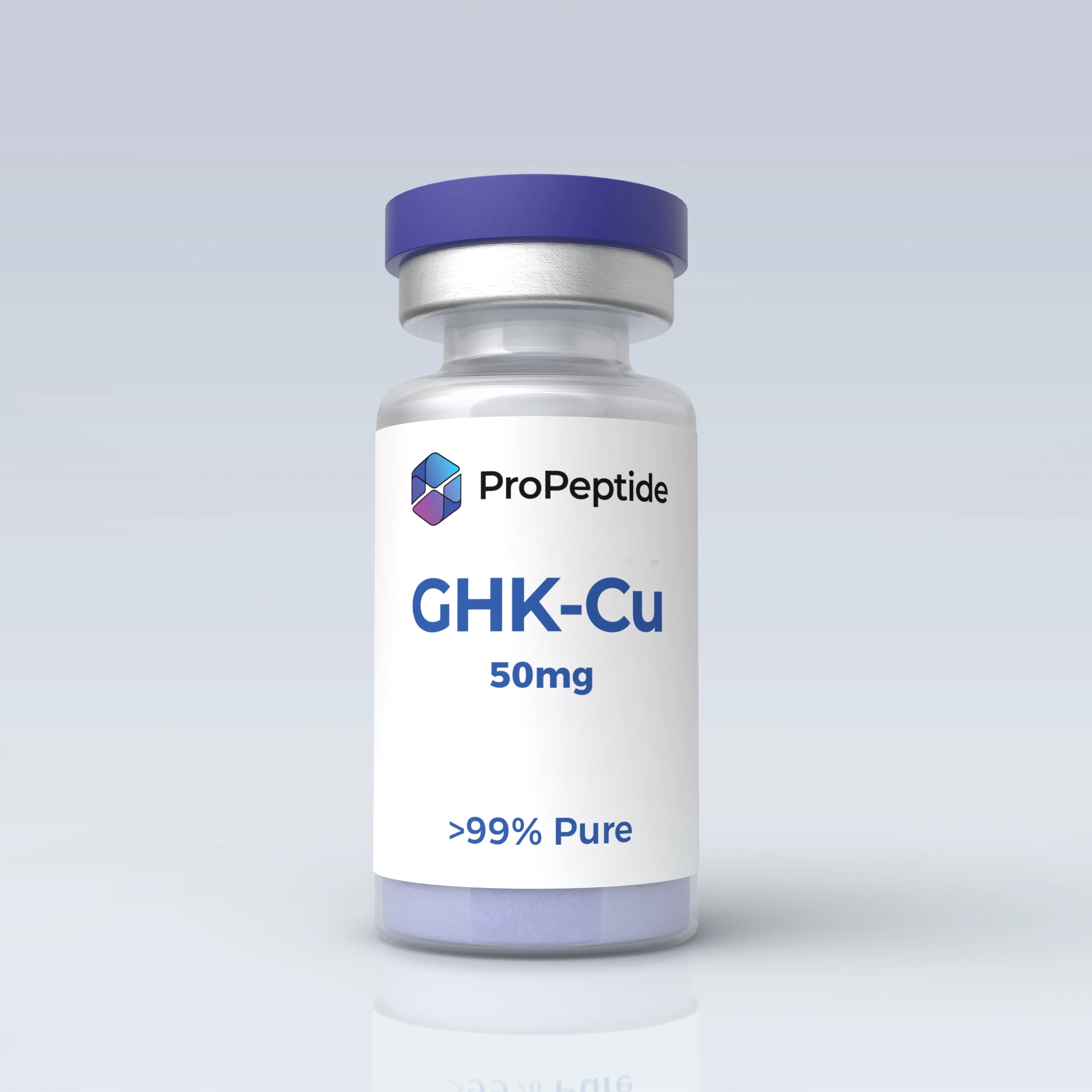
The ProPeptide GHK-Cu 50mg vial holds freeze-dried copper tripeptide (Gly-His-Lys bound to Cu²⁺), supplied by Remy Research in Dubai to a ≥99% HPLC line standard for in-vitro matrix and fibroblast studies. For research use only. Not for human or veterinary use.
- ≥99% Purity
- ProPeptide Brand Standard
- Same-Day Delivery
- Dubai
- Lyophilized Vial
- Research Format
- Cold-Chain Shipped
- +2 to +8°C
- 1x ProPeptide research vial (lyophilized powder)
- Cold-chain insulated packaging
ProPeptide Lyophilized Vial Research Format
SpecsGHK-Cu 50mg Vial
Copper peptide tested in skin-aging trials
AED 300 / vial
Choose your bundle
Minimum order is AED 400
25% off orders of AED 700+ with code KV25 at checkout
Order before 4 PM for same-day Dubai delivery.
UAE delivery: AED 50 below AED 1,000; free from AED 1,000
Specified ≥99% ProPeptide Brand Standard
- Sold by
- Remy Research
- Brand
- ProPeptide
- Manufacturer
- ProPeptide
- Tested by
- Line standard — no independent report
Ships from Dubai
What GHK-Cu is
GHK is a three-amino-acid peptide (glycine, histidine, lysine) that binds a single copper ion very tightly. The copper-loaded form, GHK-Cu, was first isolated from human plasma by Loren Pickart in 1973 and is also found in saliva and urine. Reviews of the literature report that its plasma level falls with age, from roughly 200 ng/mL in young adults to around 80 ng/mL by age 60, which is one reason it attracted attention in ageing and tissue-repair research.
The copper is the point of the molecule. It sits in a flat, square arrangement held by nitrogen atoms from glycine, the histidine ring and the peptide backbone, which gives solutions their blue colour. That arrangement lets GHK act as a copper carrier, handing Cu²⁺ to enzymes that need it rather than switching on one particular receptor.
Most of what is known comes from fibroblast cultures, wound models and gene-expression work. Human data exist, but they come from studies of finished topical cosmetic formulations, which are a different thing from a research vial. GHK-Cu is not an approved medicine.
Remy Research supplies this ProPeptide vial as lyophilised powder in a sealed glass vial, sold only as laboratory material. For research use only. Not for human or veterinary use.
What this vial gives a lab, and what is documented
50mg of freeze-dried copper peptide under a crimp seal
The vial holds 50mg of lyophilised GHK-Cu. Dry powder keeps far better in storage than peptide in solution, which is why freeze-dried material remains the usual format for laboratory stock. Keep it sealed, cold and away from light until it is needed.
A stated purity standard, with no overclaiming
The ProPeptide GHK-Cu line is made to a ≥99% HPLC purity standard. An independent, batch-specific report for this vial has not been published, and we do not suggest otherwise. Every report we have published is listed in our lab results library, so you can see which products are covered today.
Cold-chain delivery to all seven emirates
Orders travel in cold-chain packaging that keeps the vial between 2 and 8°C. Dubai orders placed before 4 PM arrive the same day, most within 4 hours. Charges and the full timetable are on the delivery page.
Other GHK-Cu formats for comparison work
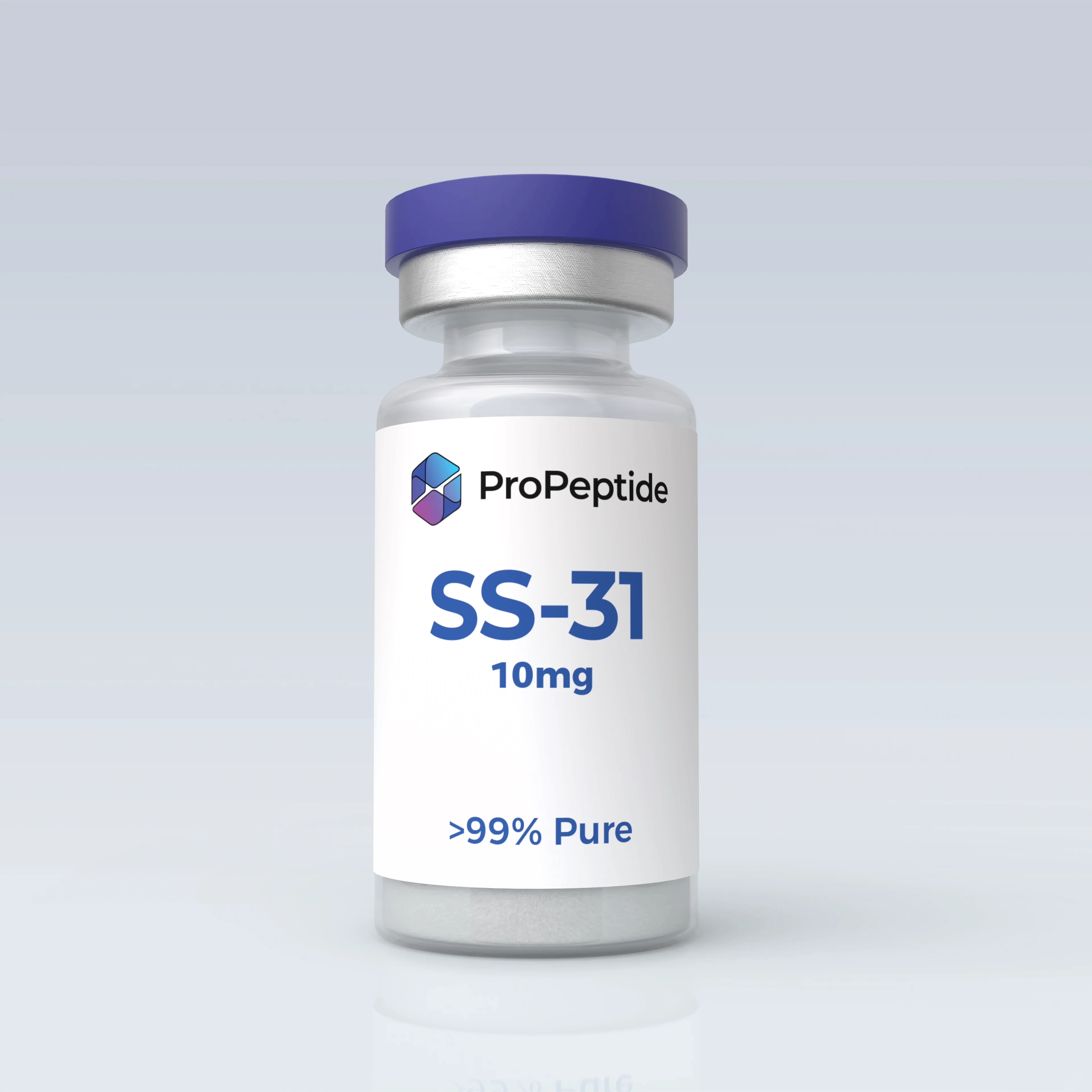
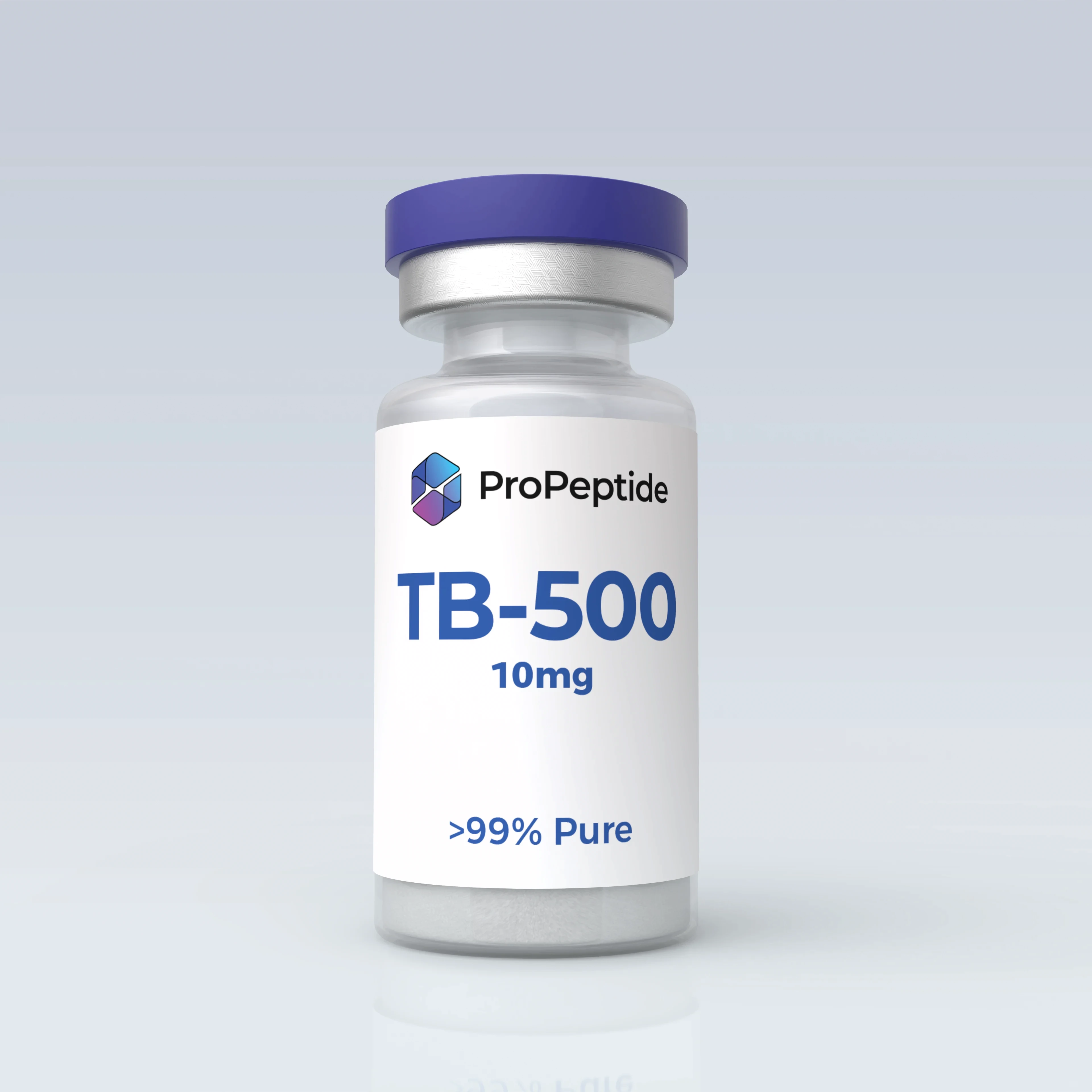
For studies that set the copper peptide beside BPC-157 and TB-500, the GLOW 70mg pen combines all three in one fixed blend. A liquid format is also available as the Genovare GHK-Cu 100mg AQ pen.
Technical Specifications
| Manufacturer | ProPeptide |
|---|---|
| Compound | GHK-Cu (Copper Tripeptide-1) |
| CAS Number | 89030-95-5 |
| Quantity | 50mg per vial |
| Format | Lyophilized powder, sealed glass vial |
| Purity | Specified ≥99% |
| Molecular Weight | 402.9 Da (with Cu²⁺) |
| Sequence | Glycyl-L-Histidyl-L-Lysine bound to copper(II) |
| Storage | +2 to +8°C lyophilized. |
What the research suggests about how GHK-Cu acts
GHK-Cu does not appear to work through a single receptor. The proposed mechanism runs through copper delivery and broad changes in gene activity, and nearly all of it was worked out in cell cultures and animal wound models. Treat the points below as research findings and open questions, not established effects in people.
Collagen production in fibroblasts
The founding observation came in 1988, when Maquart, Pickart and colleagues reported that GHK-Cu raised collagen output in cultured fibroblasts. Later wound-model work by Siméon and co-workers linked it to changes in glycosaminoglycans and small proteoglycans, the gel-like components that surround collagen fibres.
Copper enzymes: lysyl oxidase and SOD1
Lysyl oxidase is the copper-dependent enzyme that cross-links collagen and elastin into a stable network. Superoxide dismutase 1 is a copper and zinc antioxidant enzyme. Because GHK-Cu can supply copper to both, it is studied as a link between building new matrix and protecting existing matrix from oxidative damage.
Breakdown as well as build-up
Matrix is constantly broken down by metalloproteinases (MMPs) and rebuilt. Cell studies report that GHK-Cu shifts both sides of that balance and lowers some inflammatory signals such as IL-6 and TNF-α in culture.
Gene-expression data
A 2018 review by Pickart and Margolina, drawing on public gene-expression databases, described GHK influencing the activity of thousands of human genes, including many tied to matrix, growth factors and DNA repair. These are computational and cell-based associations, not proof of an effect in tissue.
What the human skin studies do and do not show
Controlled studies of aged skin, summarised in Pickart's 2008 review, reported changes in elasticity, firmness, fine lines and pigmentation endpoints. Those trials tested finished topical cosmetic products. They say nothing about a lyophilised research vial, and our research vial vs serum explainer sets out why the two categories should not be mixed up. A fuller literature review is in our GHK-Cu copper peptide research guide.
For research purposes only. Not for human consumption.
Frequently Asked Questions
Where can I buy GHK-Cu in Dubai?
Remy Research supplies this ProPeptide GHK-Cu 50mg vial from Dubai as research-use-only material. Dubai orders placed before 4 PM are delivered the same day, with most arriving within 4 hours. For the other six emirates, orders placed by 12 PM (noon) arrive the next day, and later orders arrive within two days. Saturday orders outside Dubai arrive on Monday, and there is no Sunday delivery outside Dubai. Everything ships in cold-chain packaging at 2–8°C. See the delivery page for charges.
What is GHK-Cu?
A naturally occurring tripeptide, glycyl-L-histidyl-L-lysine, carrying a bound copper(II) ion. It was first isolated from human plasma in 1973 and is studied mainly in fibroblast, wound-model and extracellular-matrix research. It is not an approved medicine.
Is this vial the same thing as a copper peptide serum?
No. The molecule is the same one listed in cosmetics as Copper Tripeptide-1, but a serum is a finished consumer formulation and this is raw lyophilised research material. It is not a cosmetic, topical or human-use product. Our vial vs serum explainer covers the difference.
Has GHK-Cu been studied in humans?
Yes, but narrowly. Peer-reviewed reviews describe controlled studies of aged skin using topical cosmetic formulations, with endpoints such as elasticity and fine lines. Those findings concern finished cosmetic products and cannot be carried over to a research vial or read as evidence of any systemic effect.
Is there a certificate of analysis for this vial?
The line is made to a ≥99% HPLC purity standard, but a batch-specific independent report for the GHK-Cu vial has not been published yet. Every report we do publish appears in the lab results library.
How does GHK-Cu relate to the GLOW blend?
GHK-Cu is the largest component of the GLOW 70mg pen, alongside BPC-157 and TB-500. Each covers a different research lane: copper and matrix biology, blood-vessel signalling, and cell migration. No published study has measured the three together, so the pairing rests on complementary pathways rather than shown synergy.
How should the vial be stored?
Keep the sealed, freeze-dried vial refrigerated at 2–8°C and out of light, and move it to the fridge as soon as the delivery arrives. It travels in cold-chain packaging within the same range.
Can this product be used by people or animals?
No. It is supplied only as laboratory material for in-vitro research. For research use only. Not for human or veterinary use.