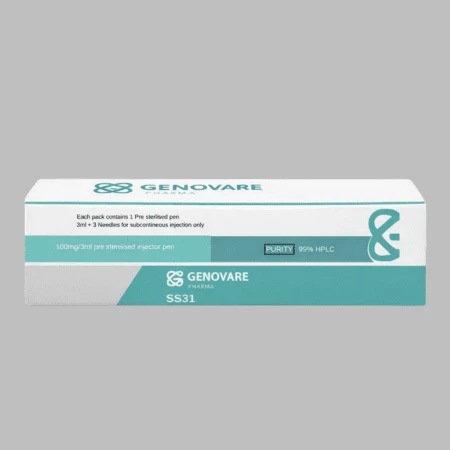
Genovare Pre-Filled Pen Premixed Aqueous
SpecsBuy SS 31 Pen: Genovare SS-31 100mg Pen in Dubai
4.9Studied for mitochondrial energy in aging
AED 1,200 / pen
- Catalogue strength
- 100 mg
- Format
- Aqueous pre-filled pen
- Pack size
- 3mL
- Purity
- 99%+
Choose your bundle
Free UAE delivery on this order
- OrderBefore 4 PM for Dubai
- PackedCold-chain, 2–8°C
- DeliveredSame day in Dubai, next day elsewhere in the UAE
Order before 4 PM for same-day Dubai delivery.
UAE delivery: AED 50 below AED 1,000; free from AED 1,000
Pay byCard payment linkUSDT
99%+ purityIn-house tested
- Sold by
- Remy Research
- Brand
- Genovare
- Manufacturer
- Genovare
- Tested by
- 99%+ line standard
- 99%+ purityLine standard
- Same-day DubaiOrder before 4 PM for same-day delivery
- FormatAqueous pre-filled pen
- Cold-chain packed2–8°C
SS-31 elamipretide pen: what research on the compound shows for mitochondrial function
- Average muscle ATP-output rise: 27% vs 12% placebo
- Studied for exercise tolerance in aging
- Studied for heart function in aging
Published study results are for the compound, not results from this product. For research use only.
The Genovare SS-31 pen is a prefilled aqueous research pen labelled 100mg of SS-31 in 3mL for professional researchers and laboratories in Dubai and across the UAE doing in-vitro mitochondrial peptide work. SS-31 is the research code for elamipretide, a synthetic mitochondria-targeting tetrapeptide studied at the inner mitochondrial membrane, and this page focuses on the pen itself, the compound’s research mechanism, handling and storage, pricing, UAE delivery, comparison with other SS-31 formats, and the difference between a research listing and an authorised drug product.
Researchers follow SS-31 because published work links its cardiolipin-binding mechanism with mitochondrial energy and bioenergetics, including ATP production, reactive oxygen species, ageing-related muscle and heart function, and kidney disease pathways. Genovare's listing does not state the sequence or say whether the peptide is the hydrochloride salt. It also gives no evidence that the formulation is equivalent to an authorised product. The pen is not offered as an authorised drug product.
A 2022 review in Oxidative Medicine and Cellular Longevity explains why kidney researchers study SS-31. Mitochondrial dysfunction leads to a fall in ATP supply and excess reactive oxygen species. That triggers cell damage, oxidative stress, apoptosis, inflammation and fibrosis. Older studies it cites tied oxygen free radicals to ischaemic acute renal failure in rats (1984) and endothelial mitochondrial oxidative stress to podocyte loss in glomerulosclerosis (2014). Kidney disease can in turn upset mitochondrial bioenergetics, membrane integrity, calcium homeostasis and mitochondrial dynamics. Loss of the mitochondrial cristal membrane leads to an inadequate ATP supply, and cells starved of ATP die by necrosis. Lipid peroxidation can set off apoptosis through intra- and extracellular signalling pathways. Severe lipid peroxidation also drives ferroptosis, a form of regulated cell death linked to acute kidney injury and diabetic kidney disease. For kidney disease treatment, the authors argue that protecting mitochondria may work better than targeting single downstream events. Elamipretide's only FDA approval is for Barth syndrome, so it is not approved to treat kidney disease.
- Pack Size
- 3mL
- Product details
- Genovare Catalogue
- Pre-Filled Pen
- Premixed Aqueous
- Storage Guidance
- Follow Package Label
- 1 pre-filled Genovare research pen
- 3 pen needles
- Genovare retail packaging
What customers say
“The SS-31 100mg AQ Pen was neatly presented and arrived without damage. Communication from the team was concise and helpful.”
“tbh the whole process was simple. Ordered the SS-31 100mg AQ Pen, received clear updates, and everything arrived neatly.”
“Order: SS-31 100mg AQ Pen
Packaging: pen was held securely in the packaging.
Communication: clear and timely.
Overall: no issues.”
“I would have preferred a narrower delivery window. That aside, the SS-31 100mg AQ Pen was neatly packaged and exactly as listed.”
“Repeat purchase, same smooth process. The SS-31 100mg AQ Pen was packed properly and the confirmation email was prompt.”
“The listing information was clear and the SS-31 100mg AQ Pen matched it on arrival. Good service from order to delivery.”
Swipe to read all 6 reviews →
Customer reviews supplied to Remy Research. Feedback covers service, packaging and delivery, not research results. For research use only.
Other formats of SS-31, including 10 mg
Ships from Dubai
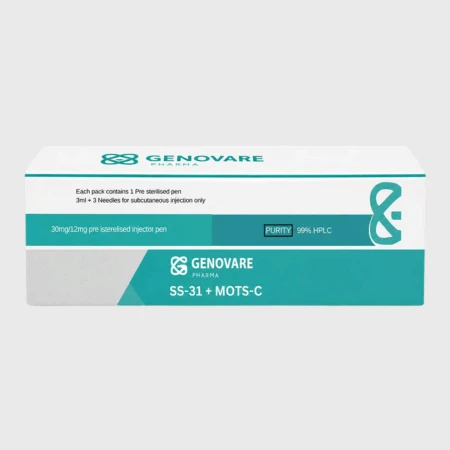
SS-31 100mg AQ Pen: what it is
SS-31, also known as elamipretide, is a synthetic four-amino-acid peptide, D-Arg-Dmt-Lys-Phe-NH2 (Dmt is 2′,6′-dimethyltyrosine), from the Szeto-Schiller peptide family, that is mitochondria-targeted and binds cardiolipin, a lipid of the inner mitochondrial membrane. Stealth BioTherapeutics developed it under the names MTP-131 and Bendavia. Its molecular formula is C₃₂H₄₉N₉O₅, and its molecular weight is 639.8 g/mol.
Genovare supplies this pen ready-made: the peptide is already dissolved in an aqueous solution, and the catalogue lists it at 100 mg in a 3mL fill. Elamipretide is the active substance of Forzinity, Stealth BioTherapeutics' prescription medicine, but this pen is a separate Genovare product: Stealth does not make it, and the Forzinity label's quality and safety data do not apply to it.
No regulator has approved this pen as a medicine. Although an elamipretide formulation received FDA accelerated approval for Barth syndrome in 2025, that approval applies only in some jurisdictions and not to this Genovare research product. Research-grade peptides are not regulated in the same way as consumer pharmaceuticals, so this listing should not be treated as a medicine. Please note that approved clinical uses for elamipretide in some jurisdictions do not change the status of this item. Remy Research sells it for in-vitro laboratory research only, not for human or veterinary use.
Batch status, storage and delivery
Batch status
Its testing line reads "99%+ line standard". Every report published so far is listed in the lab results library.
Storage and handling
Remy Research ships this pen cold-chain packed at 2–8°C, with live order tracking. After delivery, store it as the Genovare pack label directs: the label, not a general rule, sets the conditions for this product. Store unopened material as directed by the supplier, protected from heat, moisture, and light.
The peptide is already in solution, and supplier guides say a peptide solution tolerates heat far less well than dry powder; they also advise keeping peptides away from bright light. The stretch between the door and storage is the part the cold chain does not cover. A parked car in a UAE summer runs well above 40°C, the temperature of the accelerated condition (40°C at 75% relative humidity) in the ICH Q1A(R2) pharmaceutical stability-testing guideline, so a car is not a holding place even for a short errand.
If the pen spends time outside its labelled range, note how long and how warm it got. A clear solution is not proof of quality: only a retest, for example by HPLC, shows whether the peptide has changed. The peptide storage and shelf-life guide sets out the sourced figures.
Delivery in the UAE
Dubai orders placed before 4 PM are delivered the same day. In the other emirates, orders placed before 12 PM (noon) arrive the next day, otherwise within two days, and Saturday orders outside Dubai arrive on Monday. Delivery costs AED 50 below AED 1,000 and is free from AED 1,000; the minimum order is AED 400. Full terms are on the delivery page.
Chemistry · Reference dataSS-31: mitochondrial membrane targeting tetrapeptide
Identity
Mitochondria-targeted tetrapeptide
Elamipretide (SS-31)
Also known asElamipretide, MTP-131, Bendavia, SS31, SS 31
- CAS
- 736992-21-5
Molecule
- Formula
- C32
H49 N9 O5 - Molecular weight
- 639.8 g/mol Registry value for the peptide without counter-ions; not measured for this batch.
- Sequence
- D-Arg-Dmt-Lys-Phe-NH2
- Note
- Dmt is 2′,6′-dimethyltyrosine.
This product
- Manufacturer
- Genovare
- Catalogue strength
- 100 mg
- Fill volume
- 3mL
- Format
- Aqueous pre-filled pen
- Pack size
- 1 pen with 3 needles
- Note
- Mitochondria-targeting support described in research beyond the mitochondrial membrane potential: Research discussions of SS-31 describe this targeting mechanism as not relying on that gradient.
Batch documentation
99%+ line standard
Every report we have published is listed in the lab results library.
Reference data for laboratory checks. Registry values describe the compound, not measurements of this batch. On a batch report, HPLC measures purity and mass spectrometry (LC-MS) confirms identity by molecular weight. For research use only.
What the literature says
Elamipretide received FDA accelerated approval on 19 September 2025, as Forzinity, to improve muscle strength in adults and children with Barth syndrome who weigh at least 30 kg. The approval rests on an improvement in knee-extensor muscle strength, an intermediate endpoint, and continued approval may depend on a confirmatory trial; its other uses remain investigational. That approval covers Forzinity in Barth syndrome, not this pen. The SS-31 research review covers the trial record.
Frequently Asked Questions: SS-31 Pen
What are the chemical identifiers of SS-31?
Elamipretide (SS-31) has CAS number 736992-21-5, molecular formula C32H49N9O5, molecular weight 639.8 g/mol, PubChem CID 11764719. These are registry values for the compound, not measurements of a batch.
What is the SS-31 pen?
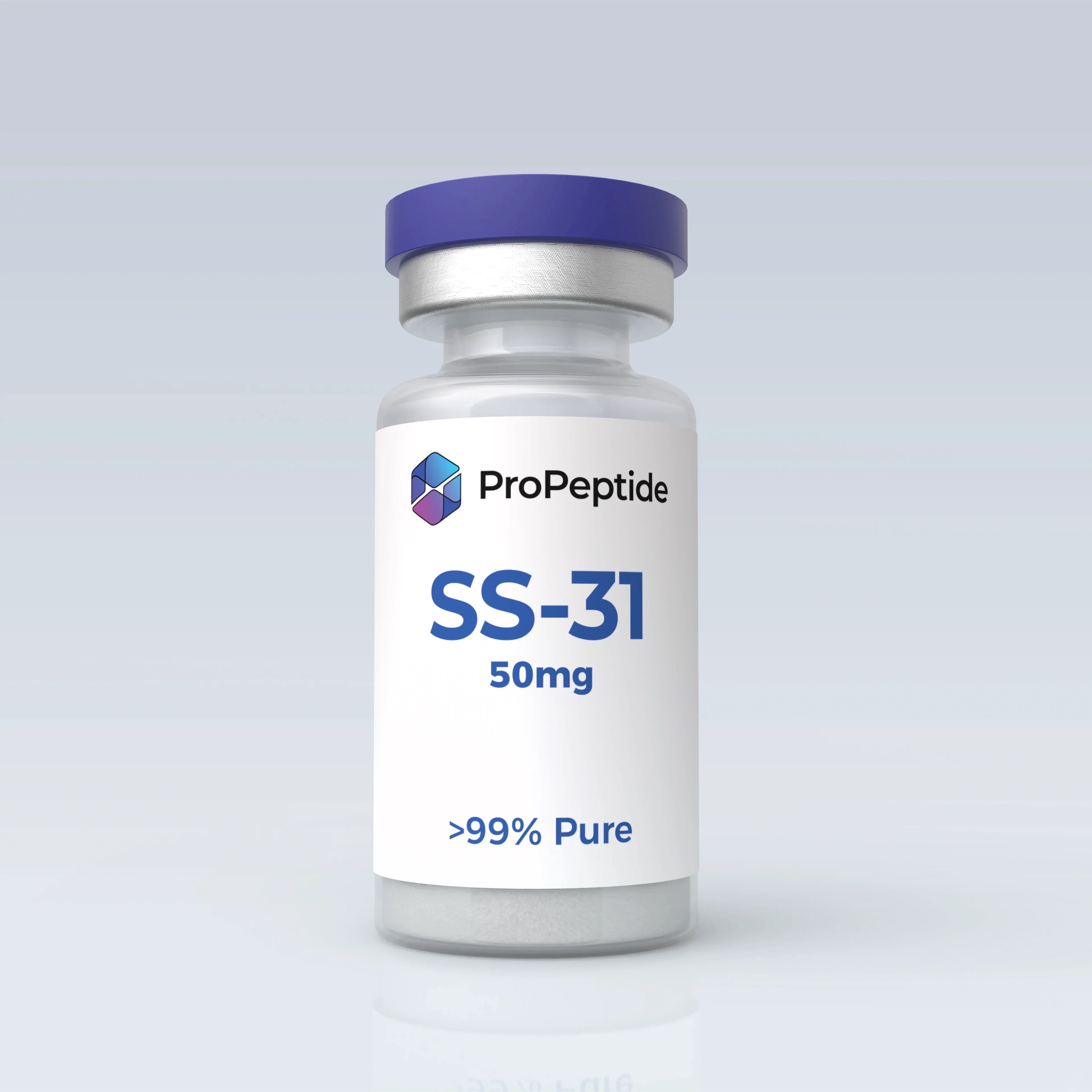
It is a pre-filled pen that Genovare labels 100mg of SS-31 in 3mL of aqueous solution. AQ in the name stands for aqueous. The peptide comes already dissolved, so this SS-31 peptide pen involves no powder and no mixing step. The ProPeptide SS-31 vial holds freeze-dried powder instead. SS-31 storage for this pen follows the Genovare pack label. Genovare's listing gives no shelf-life figure. Other names for SS-31 are elamipretide, MTP-131 and Bendavia. Remy Research sells the pen for in-vitro laboratory research only, not for human or veterinary use.
Why is SS-31 called a mitochondria targeting peptide?
Because it gathers at the mitochondria once it enters a cell. SS-31 belongs to the Szeto-Schiller peptides, which alternate aromatic and basic amino acids. A 2006 review by Hazel Szeto reports that these peptides pass into cells and concentrate more than 1,000-fold in the inner mitochondrial membrane. The same review explains the design. If mitochondria are the main source of reactive oxygen species, antioxidants that never reach them may not work well. The review credits the antioxidant action to the tyrosine or dimethyltyrosine residue. It notes that the peptides scavenge hydrogen peroxide and peroxynitrite and inhibit lipid peroxidation. A 2022 review cites studies in isolated mitochondria that put the build-up at about 5,000-fold. It adds that SS-31 does not rely on the mitochondrial membrane potential to get there. It stays at the inner membrane and is not carried into the mitochondrial matrix, even at very high concentrations. It is studied for binding cardiolipin at the inner mitochondrial membrane, where preclinical work links it to electron transport and electron transport chain organization.
How does SS-31 affect mitochondrial function at the inner mitochondrial membrane?
Most of this work used isolated mitochondria, cultured cells and animals. SS-31 binds cardiolipin, a lipid found only in the inner mitochondrial membrane. Cardiolipin shapes the cristae and holds the respiratory complexes together for oxidative phosphorylation. A 2014 review by Szeto in the British Journal of Pharmacology presents SS-31 as a compound to restore mitochondrial bioenergetics. It explains that the binding stops cardiolipin from turning cytochrome c into a peroxidase. Cytochrome c can then keep working as an electron carrier in electron transport. Birk and colleagues reported in 2013 that the SS-31 and cardiolipin complex blocks cytochrome c peroxidase activity. That activity oxidises cardiolipin and damages mitochondria during ischaemia. A 2022 review reports that, in research models, SS-31 improves electron transport and ATP synthesis. It also lowers mitochondrial reactive oxygen species and inhibits lipid peroxidation. It blocks opening of the mitochondrial permeability transition pore and inhibits mitochondrial swelling caused by calcium. The same review says it has no effect on normal mitochondria. These are findings about the compound in research models, not effects of this pen. Research describes support for mitochondrial efficiency in laboratory settings, including ATP synthesis. Preclinical findings also suggest it may reduce ROS production.
What has SS-31 research found in skeletal muscle?
The animal results are stronger than the results of clinical trials in people. Muscle is studied because loss of mitochondrial function contributes to fatigue, exercise intolerance and muscle weakness. Campbell and colleagues tested whether improving mitochondrial function with SS-31 could help aged muscle. In aged mice, they reported in 2019 that SS-31 reversed the age-related fall in maximum mitochondrial ATP production. Coupling of oxidative phosphorylation improved as well. The treated mice had more fatigue-resistant muscle and better treadmill endurance. SS-31 also restored redox balance in the aged skeletal muscle. The gains came without a rise in mitochondrial content. The authors credit improved mitochondrial quality, not mitochondrial biogenesis. An earlier 2013 study by Siegel and colleagues found that SS-31 restored mitochondrial energetics in the muscle of aged mice to young levels one hour after a single treatment. In a 2021 randomised trial in 39 older adults, muscle ATP capacity rose right after one infusion of elamipretide. The statistics were borderline. The rise had gone by day 7, and fatigue resistance did not change. In MMPOWER-3, a phase 3 trial in 218 people with primary mitochondrial myopathy, elamipretide did not improve walking distance or fatigue scores. Preclinical reports discuss mitochondrial support in muscle, including work on dysfunctional mitochondria and ATP recovery.
Is SS-31 studied in kidney disease?
Yes, mainly in animal and cell models. A 2022 review in Oxidative Medicine and Cellular Longevity describes SS-31 as a mitochondria-targeting peptide. It starts from the link between mitochondrial dysfunction and the progression of kidney disease. The review notes that SS-31 reaches the kidneys, heart, liver, lungs and skeletal muscle, with the highest levels in the kidneys. The kidneys also excrete all of it. The review covers models of acute kidney injury, the move from acute injury to chronic kidney disease, atherosclerotic renal vascular disease, renal fibrosis after ureteral obstruction and diabetic kidney disease. The studies it reviews suggest the effects come mainly from protecting mitochondrial structure, scavenging reactive oxygen species and restoring ATP supply. The review links these to less oxidative stress, apoptosis, inflammation and fibrosis in kidney tissue. Birk and colleagues (2013) studied renal ischaemia, which causes acute kidney injury by draining ATP. In their rats, SS-31 protected mitochondrial structure: the cristae membranes held up and mitochondrial swelling was prevented. ATP also recovered faster once blood flow returned. The review notes that few clinical studies have looked at kidney disease. It describes one published kidney trial, a phase 2a pilot in people with atherosclerotic renal artery stenosis who were undergoing stenting (Saad 2017). ClinicalTrials.gov lists 16 patients enrolled. The published report covers 14, six on elamipretide and eight on placebo. The trial report describes elamipretide as a peptide that binds cardiolipin and stabilises mitochondrial function. Elamipretide was linked to less kidney hypoxia after the procedure. The trial report found increased renal blood flow at three months in the elamipretide group only. The review adds that renal cortical perfusion also rose in that group. The registered primary endpoint was the change in measured glomerular filtration rate (GFR) at eight weeks. On that endpoint, ClinicalTrials.gov posts a mean rise of 6.3 mL/min with elamipretide and 12.0 mL/min with placebo, with no statistical test. The authors called it a pilot trial and saw a possible role in improving stenting outcomes for atherosclerotic renal artery stenosis. The review's authors call for larger clinical studies. They also call for diverse renal disease models to map the mechanisms and signalling pathways involved. These findings concern the studied compound, not this pen. Yes, in research settings only, including experimental kidney injury and mitochondrial stress models.
Which kidney injury models has SS-31 been tested in?
Mostly rat and mouse models, summarised in a 2022 review in Oxidative Medicine and Cellular Longevity. The review's authors note that studies of SS-31 in renal disease treatment are still limited. In rats with bilateral renal ischaemia, SS-31 protected mitochondrial structure and function early in reperfusion, and ATP recovered faster. The review links this to inhibition of the mitochondrial permeability transition pore. SS-31 preserved the mitochondrial cristae and reduced apoptosis and necrosis of renal tubular epithelial cells. A nine-month rat study followed the animals after 45 minutes of bilateral renal ischaemia. The researchers observed significant mitochondrial damage in endothelial cells, podocytes and proximal tubular cells. Treatment with SS-31 starting one month after the injury preserved mitochondrial integrity and arrested glomerulosclerosis and interstitial fibrosis. The protection lasted at least six months after treatment ended. In another ischaemia study in rats, SS-31 protected endothelial cell mitochondria in the small blood vessels of the kidney. It also inhibited TNF-α expression and lymphocyte and macrophage infiltration. In a cisplatin-induced acute kidney injury model in mice, SS-31 was reported to improve renal oxidative stress and apoptosis. In rats with contrast-induced acute kidney injury, it inhibited NADPH oxidase activity, and the review credits this with ameliorating acute tubular necrosis. In rats with unilateral ureteral obstruction, a model of obstruction-induced renal fibrosis, SS-31 reduced fibroblast and macrophage infiltration. It also reduced apoptosis and improved renal tubular cell regeneration. In mice with aristolochic acid-induced acute tubular interstitial injury, SS-31 protected kidney function, but apart from NF-κB it did not reduce the inflammatory genes the study measured. The review links this to the overly severe renal lesions that aristolochic acid causes. Beyond acute oxidative stress and inflammation, SS-31 also acted on the renin-angiotensin system in these acute injury models. These are animal findings about the compound, not effects of this pen. Published preclinical literature includes several renal injury models used to evaluate mitochondrial protection.
What has SS-31 shown in diabetic and vascular kidney models?
These results come from animal and cell studies summarised in the same 2022 review. In a diabetic kidney model and in renal mesangial cells cultured in high glucose, SS-31 lowered Nox4 expression, NADPH oxidase activity and ROS production. In those high-glucose mesangial cells, it helped stabilise mitochondrial membrane potential and ATP levels and inhibited cytochrome c release. In diabetic mice, it lowered Drp1, a protein that drives mitochondrial fission, and raised Mfn1, a mitochondrial fusion protein. The review says SS-31 inhibits cardiolipin peroxidation and takes part in central renal phospholipid remodelling in diabetic nephropathy. In lab tests on white blood cells from people with type 2 diabetes, SS-31 lowered ROS production and regulated endoplasmic reticulum stress and autophagy. In mice fed a high-fat diet for 28 weeks, SS-31 prevented glomerulosclerosis and mesangial expansion. The review traces this to protecting renal cell mitochondria, restoring renal AMP kinase activity and preventing intracellular lipid accumulation and endoplasmic reticulum stress. SS-31 had no effect on weight gain or blood glucose in those mice. The review also covers other mitochondria-targeted antioxidants. MitoQ improved defective mitophagy and ameliorated diabetic kidney injury in diabetic mice. Coenzyme Q10, a component of the mitochondrial electron respiratory chain, also has antioxidant properties. In pigs with atherosclerotic renal artery stenosis, SS-31 restored cardiolipin content and improved renal blood flow, glomerular filtration and renal vascular function. In the same study, renal expression of vascular endothelial growth factor was blunted in untreated stenotic kidneys and rose with SS-31. Used alongside angioplasty and stenting, it improved renal microvascular rarefaction and tubular damage. In pig renal artery endothelial cells, restoring cardiolipin with SS-31 reduced apoptosis and oxidative stress. In pigs with metabolic syndrome, it improved renal microvascular remodelling, and resected renal arterial rings kept a normal response to acetylcholine. The review counts these pig studies as protection against atherosclerosis-induced renal injury. Results on endothelial nitric oxide synthase differ. SS-31 prevented its fall in atherosclerotic renal stenosis but did not change it in a pig model of coronary artery stenosis. These findings concern the compound in research models, not this pen. Preclinical findings have explored mitochondrial effects, oxidative stress markers, and functional readouts in these models.
What do clinical trials say about SS-31 safety?
Human safety data come from clinical trials of elamipretide, not from research material such as this pen. In MMPOWER-3, elamipretide was well tolerated, and most adverse events were mild to moderate. A 2022 review lists local skin reactions as the main adverse effects in clinical studies: redness (57%), itching (47%), pain (20%) and hives (20%). Most were mild. Dizziness and headache were also reported. The review reports no serious adverse reactions or deaths in those studies. This pen has no safety data of its own. It is sold for in-vitro laboratory research only. Human studies and trial reporting should be reviewed directly for safety endpoints, and research use products are not approved medicines.
What do pharmacokinetic studies show about SS-31?
A 2014 review by Hazel Szeto in the British Journal of Pharmacology summarises the pharmacokinetic studies. The elimination half-life was about two hours in rats, dogs and monkeys. In animals, radiolabelled SS-31 reached the kidneys, heart, liver, skeletal muscle and lungs, with the highest levels in the kidneys. The kidneys excrete all of it: in non-clinical and clinical studies, 100% of the peptide and its metabolites were found in urine. These figures describe the compound in research studies, not this pen. Pharmacokinetic data are discussed in the research literature and should be interpreted separately from efficacy claims.
What does the SS-31 100mg pen cost in the UAE?
The SS-31 peptide price here is AED 1,200 for one Genovare 100mg pen. Orders of two or five pens keep the same unit price. A single pen already passes the AED 1,000 free-delivery line. The minimum order is AED 400. Check the live product page for current UAE pricing, as stock and prices can change.
How does the SS-31 100mg pen compare with the SS-31 40mg pen?
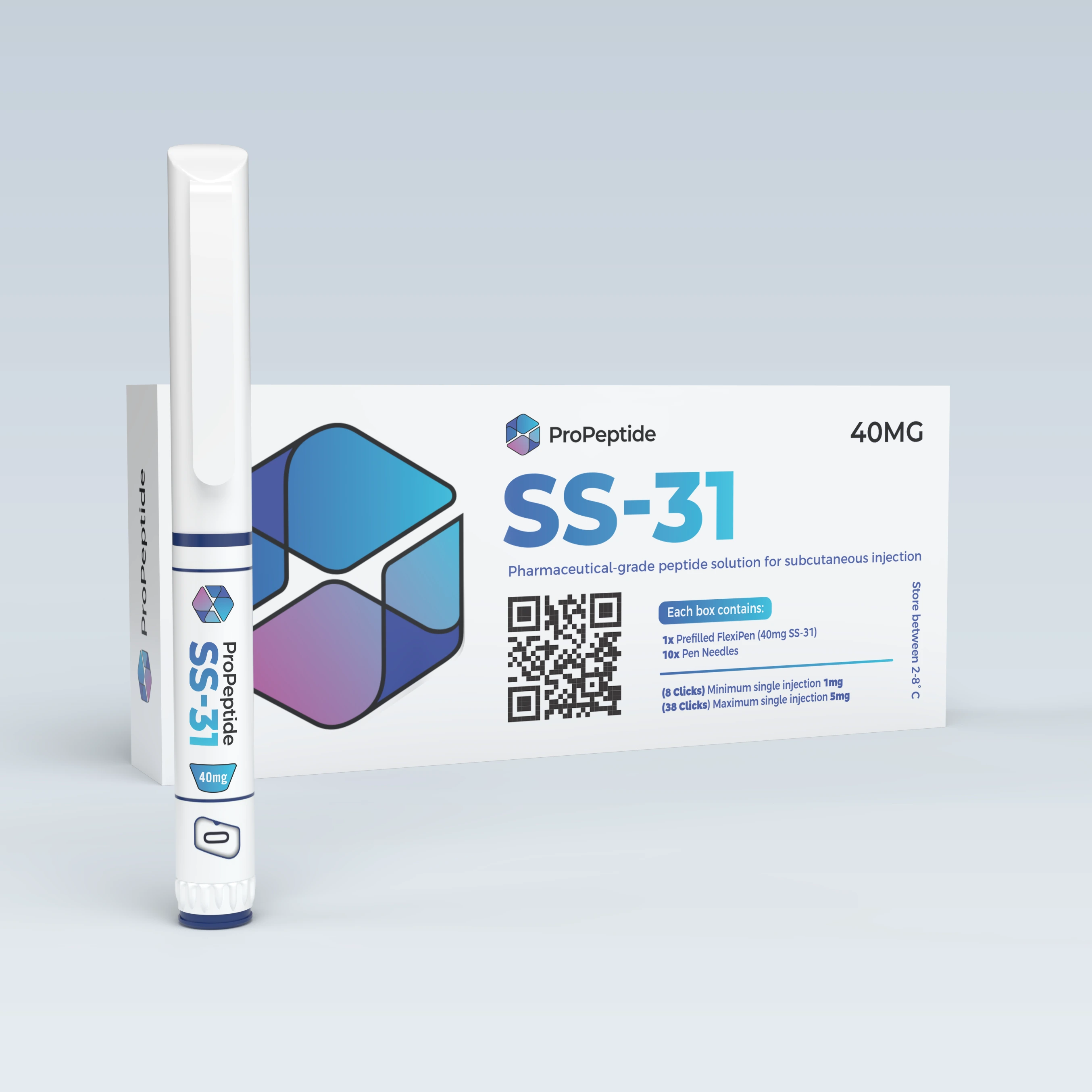
Both are pre-filled 3mL pens of the same peptide. This Genovare pen is labelled 100mg. The ProPeptide SS-31 40mg pen holds 40mg in a FlexiPen device. Neither pen has a published batch report yet. Prices and stock are on each product page. Compare the listed strength, format, and current availability on the relevant product pages.
What is the SS-31 peptide sequence?
The SS-31 peptide sequence is D-Arg-Dmt-Lys-Phe-NH2. Read in order, that is D-arginine, 2′,6′-dimethyltyrosine, lysine and phenylalanine, with an amide at the C-terminal end. The alternating aromatic and basic residues are the design motif of the Szeto-Schiller peptides. The SS-31 CAS number is 736992-21-5. Genovare does not state a sequence for this pen, and no batch analysis has confirmed it.
Can I buy elamipretide here?
Yes, as research material. SS-31 is the laboratory code for elamipretide. Remy Research sells this pen, labelled as SS-31, online for in-vitro research. It is not Forzinity, the prescription medicine that contains elamipretide. This pen has no medical approval. You can buy elamipretide here only for laboratory work, not for human or veterinary use.
Is SS-31 FDA approved?
Only as one prescription medicine. Elamipretide, the drug name for SS-31, is the active substance of Forzinity. On 19 September 2025, FDA granted Forzinity accelerated approval for Barth syndrome, a rare mitochondrial disease, in patients weighing at least 30 kg. The approval rests on improved strength of the knee-extensor muscle, and FDA requires a confirmatory trial. For every other use, elamipretide is still investigational. Its maker is testing it in other conditions, including a phase 3 trial in dry age-related macular degeneration. This Genovare pen is not Forzinity and has no medical approval. Remy Research sells it for in-vitro laboratory research only, not for human or veterinary use.
What has SS-31 research found more broadly?
The evidence base includes animal studies and animal models rather than proof of benefit in people. Research has also examined neural tissues exposed to oxidative insults, along with age related changes and other conditions linked to mitochondrial dysfunction.
How does the Genovare SS-31 pen differ from the other formats?
This Genovare pen holds 100 mg as an aqueous solution in a pre-filled pen. Remy Research also lists 3 related formats from ProPeptide and Genovare; the comparison table on this page sets out their compounds, formats and batch documentation.
How is the Genovare SS-31 pen shipped and stored?
Remy Research ships it cold-chain packed at 2–8°C, with live order tracking. After delivery, the storage conditions printed on the Genovare pack apply. The peptide is already in solution, which tolerates heat far less well than dry powder, so keep the pen out of bright light and out of parked cars. Store refrigerated up to 8°C and follow the product handling guidance on arrival.
Is this pen the same as Forzinity?
No. Elamipretide (SS-31) is the active substance of Forzinity, which FDA approved on 19 September 2025, under accelerated approval, to improve muscle strength in Barth syndrome. This pen is a separate Genovare product; Stealth BioTherapeutics does not make it, and no regulator has approved it as a medicine. Remy Research sells it for in-vitro laboratory research only, not for human or veterinary use.
How fast is delivery of the Genovare SS-31 pen in the UAE?
Dubai orders placed before 4 PM are delivered the same day. In the other emirates, orders placed before 12 PM (noon) arrive the next day, otherwise within two days, and Saturday orders outside Dubai arrive on Monday. Delivery costs AED 50 below AED 1,000 and is free from AED 1,000; the minimum order is AED 400.
Where can I buy SS-31 peptide online in the UAE?
Remy Research sells the Genovare SS-31 100mg AQ pen online at AED 1,200, for laboratory research use only. There is no walk-in store, so orders go through the website. Dubai orders placed before 4 PM are delivered the same day.
Is SS-31 available in 10mg or 50mg?
This Genovare pen holds 100mg of SS-31 in 3mL. The page also lists the ProPeptide SS-31 Vial, offered as 10mg and 50mg vials, and the ProPeptide SS-31 40mg Pen. All are supplied for laboratory research use only.