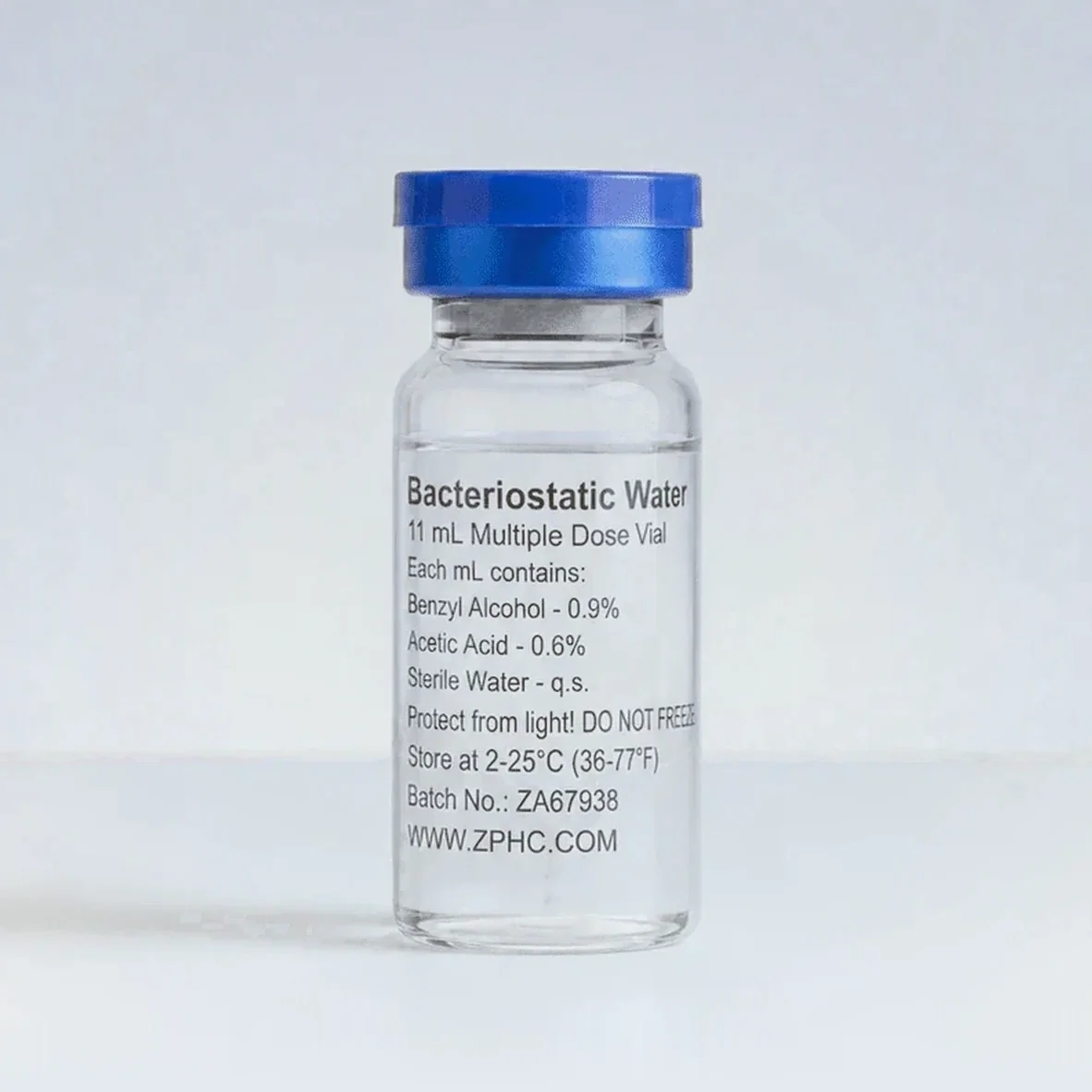
ZPHC Multi-Dose Vial Lab Diluent
SpecsBuy Bacteriostatic Water with Acetic Acid 11mL in Dubai
Acidic diluent for specific protocols
AED 120 / vial
- Quantity
- 11mL with benzyl alcohol 0.9% and acetic acid 0.6%
- Format
- Sterile solution vial
Restock Alert
Get an email when BAC Water + Acetic Acid 11mL is back
Get an email when BAC Water + Acetic Acid 11mL is back We email you once when it's back.
- Sold by
- Remy Research
- Brand
- ZPHC
- Manufacturer
- ZPHC
- Tested by
- 99%+ line standard
What the research shows
- 0.9% benzyl alcohol + 0.6% acetic acid
- Sterile solution vial
- Store at room temperature
Published study results for the compound, not results from this product. For research use only.
This page is for laboratories in Dubai and the UAE that need bacteriostatic water with acetic acid, sold here as an 11mL ZPHC vial.
ZPHC 11mL acidified bacteriostatic water: sterile water acidified with 0.6% acetic acid and preserved by 0.9% benzyl alcohol, a specialist laboratory diluent for basic peptides that dissolve poorly in neutral water. For research use only. Not for human or veterinary use.
Choose it only when a compound's datasheet or your written method names an acidic diluent. For most research peptides, Remy Research's guides treat a plain bac water vial or sterile water as the standard solvent.
- Sterile Solution
- Diluent Accessory
- Same-Day Delivery
- Dubai
- Multi-Dose Vial
- Lab Diluent
- Room Temperature
- 15 to 30°C
- 1 ZPHC bacteriostatic water with acetic acid vial (11mL)
Ships from Dubai
An Acidified Diluent, Not Everyday Bacteriostatic Water
This ZPHC vial holds 11mL of sterile water with two additions: the familiar 0.9% benzyl alcohol preservative and 0.6% acetic acid. The acid lowers the pH of the solution, and that is the whole reason it exists as a separate product.
Most laboratory work does not need it. Remy Research's guides treat dilute acetic acid as a fallback solvent for peptides that will not dissolve in water, not as a default. If your written method names ordinary bacteriostatic water, the standard ZPHC 11mL vial is the matching product. The ZPHC 40mL vial and the 3mL bac water vial also hold plain bacteriostatic water, with no acid.
Bacteriostatic water vs acetic acid: what is different
Comparing bac water vs acetic acid means comparing two separate additions to sterile water. Benzyl alcohol is a preservative that limits bacterial growth. Acetic acid is an acidifier that creates an acidic environment. This vial carries both, and the table sets it beside the other common laboratory diluents.
| Diluent | What is in it | Preservative | Label notes |
|---|---|---|---|
| Plain bacteriostatic water (bac water) | Sterile water plus 0.9% benzyl alcohol | Yes | pH 5.7, range 4.5 to 7.0; multi-use vial (Hospira label) |
| Acetic acid water | Sterile water plus dilute acetic acid | Only if its label lists one | Acidic solution; the strength varies by product |
| This ZPHC vial | Sterile water plus 0.6% acetic acid and the same preservative | Yes | 11mL multi-use vial; the listing gives no pH figure |
| Plain sterile water | Water with no bacteriostat or added buffer | No | Single-use container; any unused portion is discarded (Hospira label) |
| Bacteriostatic saline | Normal saline (0.9% sodium chloride) plus benzyl alcohol | Yes | pH 5.0, range 4.5 to 7.0; multi-use vial (HealthFirst label) |
Acetic acid 0.6% and benzyl alcohol 0.9%: two jobs in one vial
The benzyl alcohol is the bacteriostatic preservative. CDC notes that a preservative of this kind helps limit bacterial growth in a multi-use vial but does not give complete protection against contamination.
The 0.6% acetic acid is the acidifier. It turns the diluent into a weak acetic acid solution. That acidic environment can help certain peptides dissolve, mainly basic ones. That acid is the only listed difference between this vial and the plain ZPHC 11mL vial.
Why Acetic Acid Turns Up in Peptide Lab Work
Helping basic peptides dissolve
Our bacteriostatic water guide notes that dilute acetic acid is sometimes used as an alternative solvent for peptides that resist dissolving in water. Bachem's solubility guide explains why: a basic peptide, with more basic than acidic residues, tends to dissolve in acidic solvents such as acetic acid.
pH and peptide stability
Our peptide stability and storage guide cites Sigma-Aldrich, which says sterile buffers at pH 5 to 6 prolong the storage life of peptide solutions and that pH above 8 should be avoided. It also cites a 2021 study in which exenatide stayed relatively stable at pH 4.5 at 37°C, while higher pH brought oxidation, deamidation and aggregation. These are mildly acidic conditions from named sources. They are not stability data for this vial.
Confirm compatibility first
Acid is not harmless to every compound. The bacteriostatic water guide advises checking acetic acid compatibility against the specific peptide before relying on it. The benzyl alcohol in this vial brings its own sensitivities, discussed in bacteriostatic vs sterile water.
Acid can also damage delicate peptide structures. Sigma-Aldrich's handling guide notes that under acidic conditions the peptide chain can be cleaved at aspartate-proline (Asp-Pro) sites. The Hospira bacteriostatic water label on DailyMed adds that certain compounds may be incompatible with a vehicle containing benzyl alcohol.
Acetic acid water for peptides: which ones and why
Acetic acid water for peptides is a narrow tool, and many peptides never need it. Sigma-Aldrich explains that the number and type of charged residues decide how well a peptide dissolves in an aqueous solution. Peptides in general carry more charges at pH 6 to 8 than at pH 2 to 6, so peptides generally dissolve better close to neutral pH.
A basic peptide has a net positive charge, and the surrounding pH shifts that peptide's electrical charge. Sigma-Aldrich counts histidine as charged only below pH 6, so at a lower pH histidine adds to that positive charge. For basic sequences that resist water, Sigma-Aldrich and Bachem both list acetic acid as an option.
Hydrophobic peptides are a different problem. For neutral or highly hydrophobic sequences with poor solubility in aqueous solution, Bachem lists organic solvents such as DMSO and acetonitrile alongside acetic acid, and Sigma-Aldrich points to acetonitrile, DMSO or DMF. So acetic acid water does not fix every difficult peptide.
Peptide solubility starts with the datasheet
No single solvent suits all research peptides. Sigma-Aldrich states that none dissolves every freeze-dried peptide while keeping it intact and usable in an assay. Bachem issues a lot-specific analytical data sheet for each of its peptides that states solubility in a named solvent, and recommends that solvent where it suits the application. That compound-specific documentation is where to find the right solvent for a particular peptide. If it names either acetic acid water or plain bac water, compare its stated strength and preservative with this vial before choosing.
Chemistry · Reference dataBacteriostatic water with acetic acid chemistry & specifications
Identity
Sterile diluent
Water + Benzyl alcohol + Acetic acid
This product
- Manufacturer
- ZPHC
- Active ingredients
- Benzyl alcohol 0.9%; acetic acid 0.6%; sterile water q.s.
- Intended research use
- Protocols that specifically call for an acidic diluent
- Volume
- 11mL per vial
- Format
- Sterile solution
- Storage
- Room temperature
Composition
Water Solvent
- CAS
- 7732-18-5
- Formula
- H2
O - Molecular weight
- 18.015 g/mol
- Share
- Balance
Benzyl alcohol Preservative
- CAS
- 100-51-6
- Formula
- C7
H8 O - Molecular weight
- 108.14 g/mol
- Share
- 0.9%
Acetic acid Acidifier
- CAS
- 64-19-7
- Formula
- C2
H4 O2 - Molecular weight
- 60.05 g/mol
- Share
- 0.6%
Batch documentation
99%+ line standard
Every report we have published is listed in the lab results library.
Reference data for laboratory checks. Registry values describe the compound, not measurements of this batch. For research use only.
For research purposes only. Not for human consumption. Published third-party test results correspond to the batch supplied.
Frequently Asked Questions
What does the 0.6% acetic acid change?
It makes the solution acidic. Standard bacteriostatic water contains the same 0.9% benzyl alcohol but no acid.
Should I pick this over standard bacteriostatic water?
Only when your method explicitly names an acidified diluent. Otherwise the plain ZPHC 11mL or 40mL vial is the right match.
Does the acidified version still contain a preservative?
Yes. Benzyl alcohol at 0.9% is present alongside the acetic acid, so the vial remains bacteriostatic.
Where can I buy bacteriostatic water with acetic acid in Dubai?
Through Remy Research. A Dubai order received before 4 PM is dispatched that day, and reaches its destination the same day, while an order for elsewhere in the UAE placed before noon lands the following day. Fees are listed on the delivery page.
Is this diluent meant for people or animals?
No. Remy Research sells it only for in-vitro laboratory research, never for human or veterinary use.
Is bac water and acetic acid the same?
No. Bac water is sterile water with a benzyl alcohol preservative, and the Hospira label on DailyMed gives its pH as 5.7 within a 4.5 to 7.0 range. Acetic acid water is sterile water with dilute acetic acid, which makes it acidic. This ZPHC vial combines the two in one 11mL vial.
Does bac water have acetic acid?
Standard bac water does not, and it is not the same as acetic acid water. The Hospira bacteriostatic water label on DailyMed lists only water and benzyl alcohol. This vial's listing names the acid: acetic acid 0.6%.
Can you mix bac water and acetic acid together?
This vial is the ready-made combination. ZPHC fills it with 0.6% acetic acid and 0.9% benzyl alcohol in sterile water. Remy Research sells it for laboratory research use only and gives no instructions here for combining diluents.
What is acetic acid water used for in laboratory research?
Sigma-Aldrich notes that most peptides dissolve better near neutral pH. Acetic acid water serves as an acidic solvent for those that will not dissolve properly, chiefly basic peptides with a net positive charge. Bachem and Sigma-Aldrich both list acetic acid as an option for those sequences. This vial is sold for laboratory research use only and not for therapeutic use.
How do sterile water and normal saline differ from bac water?
Plain sterile water has no bacteriostat or added buffer, and the Hospira label limits it to single-use containers with any unused portion discarded. Normal saline is 0.9% sodium chloride. Its bacteriostatic version adds the same preservative and lists a pH of 5.0 (4.5 to 7.0). None of the three contains acetic acid. Unlike tap water, the sterile water, bacteriostatic water and bacteriostatic saline labels cited here each describe a sterile, nonpyrogenic preparation.
Does bacteriostatic water with acetic acid need to be refrigerated?
Not while sealed. The listing gives room temperature, 15 to 30°C, away from light, and the printed expiry date sets the shelf life of sealed vials. For an opened multi-use vial, CDC guidance is to date it and discard it within 28 days unless the manufacturer states another date. The preservative lowers contamination risk but does not remove it. Remy Research has not published a stability study for this formula.
What is in this vial?
This vial contains water (balance, CAS 7732-18-5); benzyl alcohol (0.9%, CAS 100-51-6); and acetic acid (0.6%, CAS 64-19-7). The chemistry table lists each one's registry identifiers where a registry record exists.