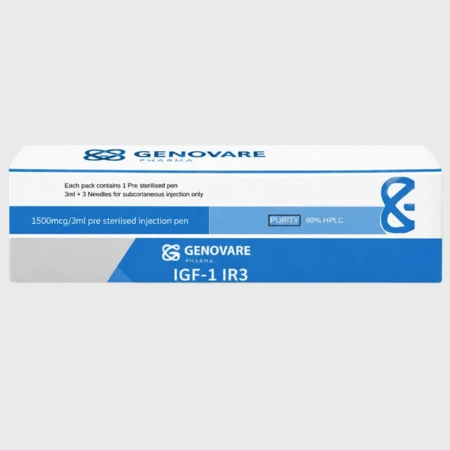
Genovare Pre-Filled Pen Premixed Aqueous
SpecsBuy IGF-1 LR3 Pen: Genovare 1,500mcg in Dubai
4.9Studied for muscle and tissue growth
AED 650 / pen
- Catalogue strength
- 1,500 mcg
- Format
- Aqueous pre-filled pen
- Pack size
- 3mL
- Purity
- 99%+
Choose your bundle
Add AED 350 more for free UAE delivery
- OrderBefore 4 PM for Dubai
- PackedCold-chain, 2–8°C
- DeliveredSame day in Dubai, next day elsewhere in the UAE
Order before 4 PM for same-day Dubai delivery.
UAE delivery: AED 50 below AED 1,000; free from AED 1,000
Pay byCard payment linkUSDT
99%+ purityIn-house tested
- Sold by
- Remy Research
- Brand
- Genovare
- Manufacturer
- Genovare
- Tested by
- 99%+ line standard
- 99%+ purityLine standard
- Same-day DubaiOrder before 4 PM for same-day delivery
- FormatAqueous pre-filled pen
- Cold-chain packed2–8°C
IGF-1 LR3 peptide and cell proliferation: what the research shows
- Studied for stronger effects than IGF-1
- Studied for cell growth in culture
- Studied for protein retention in rats
Published study results for the compound, not results from this product. For research use only.
IGF-1 LR3 Dubai stock for research laboratories: one Genovare pen pre-filled with 3 mL of premixed aqueous solution and labelled 1,500 mcg. Labs can buy IGF-1 LR3 here for in-vitro laboratory research only. It is not for human use.
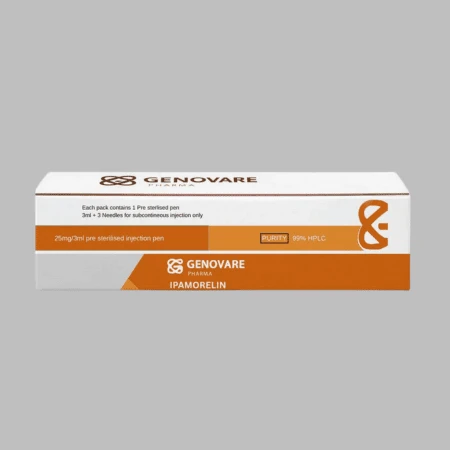
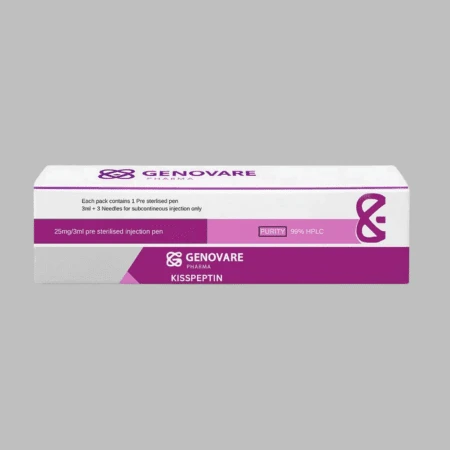
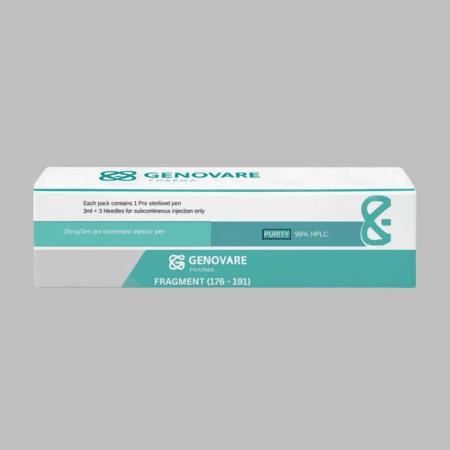
By convention, the name IGF-1 LR3 (also written IGF-1 Long R3 or Long R3 IGF-I) refers to an engineered 83-amino-acid analogue of human insulin-like growth factor 1. It differs from native IGF-1 by a combination of two structural changes: an arginine substitution at position 3, where the natural sequence has glutamic acid, and a 13-residue extension at the N terminus. Genovare’s own listing names this pen IGF-1 LR3 1500 mcg/3 mL (checked 12 October 2026), but the photographed pack reads IR3, so the analogue identity is not confirmed.
The evidence for IGF-1 LR3 comes from cell culture and animal studies. It is not an FDA-approved medicine, and a ClinicalTrials.gov search on 22 October 2026 found no registered clinical trial of it in people. If you are working out where to buy IGF-1 LR3 in the UAE, start with the identity note above: the pack label and the maker’s listing do not yet agree.
This page is for laboratory researchers in the UAE who use IGF-1 LR3 in cell culture work. Identity matters for that work, because LR3 and native IGF-1 behave differently in cell and rat studies. The IGF-1 LR3 price in Dubai is the same per pen whether you order one, two or five pens. Every order is packed cold-chain at 2–8°C, and Dubai orders placed before 4 PM arrive the same day.
- Pack Size
- 3mL
- Product details
- Genovare Catalogue
- Pre-Filled Pen
- Premixed Aqueous
- Storage Guidance
- Follow Package Label
- 1 pre-filled Genovare research pen
- 3 pen needles
- Genovare retail packaging
What customers say
“My order of IGF-1 LR3 1,500mcg AQ Pen was handled efficiently. Everything matched the listing and the parcel was well protected.”
“No fuss at all. Clear updates, careful packaging, and the IGF-1 LR3 1,500mcg AQ Pen looked exactly as expected.”
“Order: IGF-1 LR3 1,500mcg AQ Pen
Packaging: pen was held securely in the packaging.
Communication: clear and timely.
Overall: no issues.”
“Delivery took a little longer than I first expected, although the updates were helpful and the IGF-1 LR3 1,500mcg AQ Pen arrived in good condition.”
“Ordered the IGF-1 LR3 1,500mcg AQ Pen again because the first order went smoothly. Same clear labeling and reliable delivery.”
“Checkout was quick, and the order confirmation had the details I needed. The IGF-1 LR3 1,500mcg AQ Pen arrived neatly packed.”
Swipe to read all 6 reviews →
Customer reviews supplied to Remy Research. Feedback covers service, packaging and delivery, not research results. For research use only.
Ships from Dubai
Chemistry · Reference dataIGF-1 LR3 chemistry & specifications
Identity
IGF-1 analogue
IGF-1 LR3 (pack label says IR3)
Registry note
Genovare’s listing names LR3 (checked 12 October 2026) while the photographed pack reads IR3, so the form is not confirmed. Long R3 IGF-1 is registered as CAS 946870-92-4.
This product
- Manufacturer
- Genovare
- Catalogue strength
- 1,500 mcg
- Fill volume
- 3mL
- Format
- Aqueous pre-filled pen
- Pack size
- 1 pen with 3 needles
Batch documentation
99%+ line standard
Every report we have published is listed in the lab results library.
Reference data for laboratory checks. Registry values describe the compound, not measurements of this batch. For research use only.
Frequently Asked Questions about IGF-1 LR3
What is IGF-1 LR3?
It is a non-glycosylated polypeptide with an approximate molecular weight of 9.1 kDa. IGF-1 LR3 is a modified analog of human insulin-like growth factor 1 (IGF-1). Francis GL and colleagues in Adelaide described it in 1992 as Long [Arg3]-IGF-I. They made it in Escherichia coli bacteria as a fusion protein and called these analogues very useful reagents for studying IGF-I action (J Mol Endocrinol 1992). The short names LR3 and Long R3 come from that name. Native IGF-1 is a single chain of 70 amino acids held together by three internal disulfide bridges, with a molecular weight of 7,649 Da (Increlex label). The LR3 form has 83. Glutamic acid at position 3 is replaced by arginine, and 13 extra residues sit at the N terminus. Those 13 are the first 11 amino acids of methionyl porcine growth hormone plus a valine-asparagine link. In the published LR3 sequence none of the 13 is a cysteine, so the analogue keeps the six cysteines that form the three disulfide bonds of native IGF-1. GenScript's data sheet describes recombinant Long R3 IGF-I made in E. coli as a single chain that is not glycosylated, with a molecular mass of 9,111 Da (about 9.1 kDa). These details describe the published sequence and GenScript's product. None of them has been tested on this pen.
IGF-1 LR3 vs IGF-1: how does it differ from native IGF-1?
The key difference is binding. In blood, IGF binding proteins hold native IGF-1 and are thought to slow its transfer to tissues (Tomas FM et al., Biochem J 1992). IGF-1 binds IGFBP-3, IGFBP-4 and total rat plasma IGF binding proteins with about 1,000 times higher affinity than LR3 IGF-I does (Ballard FJ et al., Growth Regul 1993). Its binding to the type 1 IGF receptor is about 3 times weaker (Tomas FM et al., 1992). In cell lines that release IGF binding proteins, the Adelaide group linked the higher potency of these analogues to weak binding-protein binding rather than to stronger receptor binding (King R et al., J Mol Endocrinol 1992; Francis GL et al., 1992). In chicken embryo fibroblasts, which release no detectable IGF binding proteins, it was less potent than IGF-1 (Francis GL et al., 1992). Claims of a longer half-life are not supported by these studies. In rats it left the blood faster than native IGF-1 because it binds IGF binding proteins so weakly (Ballard FJ et al., 1993; Tomas FM, Lemmey AB, Read LC and Ballard FJ, J Endocrinol 1996).
What is the IGF-1 LR3 peptide used for in research?
One laboratory use is cell culture. A 2006 paper by GroPep scientists says LONG R3 IGF-I was engineered for making biopharmaceutical proteins in mammalian cells, where it can replace insulin in serum-free media. It supported Chinese hamster ovary (CHO) cell growth and survival at concentrations at least 200-fold lower than insulin needs. For HEK293 cells it was a stronger growth and survival factor than insulin or native IGF-1 (Voorhamme D and Yandell CA, Mol Biotechnol 2006). That study showed direct receptor activation: it switched on both the type 1 IGF receptor and the insulin receptor. In rat L6 myoblasts, a skeletal muscle cell line, it was more potent than native IGF-1 at stimulating protein synthesis and the DNA synthesis that comes before cell division (Francis GL et al., 1992). Results depend on the cell type. In turkey muscle satellite cells grown without serum, a chicken version of LR3 IGF-I was weaker than chicken IGF-I at promoting cell proliferation (Pesall JE et al., Poult Sci 2001). Animal-model work goes beyond muscle. In apolipoprotein E knockout mice, a model of atherosclerosis, Long R3 IGF-1 reduced stenosis and plaque core size and doubled the cap-to-core ratio in early disease. In advanced plaques it more than doubled the vascular smooth muscle cell content and lowered the rate of bleeding inside the plaque (von der Thüsen JH, Borensztajn KS, Moimas S and colleagues, Am J Pathol 2011). Research use commonly focuses on receptor signaling, ligand interactions, and cell-response models. Studies also examine receptor activation, receptor phosphorylation, and the PI3K–Akt pathway in controlled models.
Is IGF-1 LR3 studied for muscle growth?
Only in cells and animals. Published work also looks at protein synthesis, cell proliferation, differentiation, and muscle cell differentiation in experimental systems. In rats made catabolic with dexamethasone, IGF peptides raised muscle protein synthesis and lowered a urinary marker of muscle protein breakdown. LR3 IGF-I was about 2.5 times as potent as IGF-1 for body weight and nitrogen gain, and the gain in carcass weight reflected nitrogen (protein) rather than fat (Tomas FM et al., Biochem J 1992). In diabetic rats, IGF-1, LR3 IGF-I and a second analogue all raised muscle protein synthesis rates by up to 50%, with IGF-1 the least potent (Tomas FM et al., Biochem J 1993). In a 14-day study in normal rats, IGF-1 and LR3 IGF-I raised body weight, nitrogen retention and food conversion efficiency, and treated rats kept the body composition typical of younger animals. LR3 IGF-I was 6 times as potent for growth (Ballard FJ et al., 1993). Not every result favoured LR3. In a 1996 rat study it was barely equal to IGF-1 at reversing carcass muscle loss (Tomas FM, Lemmey AB, Read LC and Ballard FJ). A ClinicalTrials.gov search on 22 October 2026 found no registered human trial.
Is IGF-1 LR3 FDA approved?
No. IGF-1 LR3 is not FDA approved for human use, and Drugs@FDA lists no product containing it (openFDA search, 22 October 2026). The approved IGF-1 medicine sold in the US is mecasermin (Increlex). The FDA first approved it in 2005, and its sequence is identical to human IGF-1. Its label covers clinical use in children aged 2 and over with growth failure from severe primary IGF-1 deficiency, or from growth hormone gene deletion with neutralising antibodies to growth hormone. That label describes the approved drug. This pen is sold as research material. This product is sold strictly for laboratory research use and is not approved as a drug for human use.
Does IGF-1 carry a hypoglycemia risk?
For the approved medicine, yes. Its insulin-like activity can cause rapid drops in blood sugar. The US mecasermin label lists hypoglycaemia (low blood sugar) as its first warning. Severe drops in blood glucose have led to seizures in treated patients. In the label's clinical studies of 71 patients with primary IGF-1 deficiency, 30 (42%) reported hypoglycaemia at least once, and 4 had seizures or loss of consciousness from low blood glucose. Of those 30, 14 had a history of hypoglycaemia before treatment. The label notes that the drug has insulin-like hypoglycaemic effects. Its pharmacology section explains why: IGF-1 lowers glucose production in the liver and raises glucose use in other tissues. The same label lists malignant neoplasia as a contraindication and reports cancer cases in treated children. IGF signalling is also studied for a key role in cancer biology. A 2008 review set out considerable evidence that insulin and IGF growth signals have important roles in neoplasia (Pollak M, Nat Rev Cancer 2008). For context, these are facts about the approved native-sequence drug and the wider IGF field. IGF-1 LR3 has no approved label, and no registered trial has tested its risk in people (ClinicalTrials.gov, 22 October 2026). In diabetic rats the IGF peptides, LR3 included, restored growth but did not lower the glucose lost in urine as insulin did (Tomas FM et al., 1993).
Can IGF-1 LR3 stimulate abnormal cell growth?
Potentially, which is why it is limited to research settings. In cell culture it drives cell division, including in a human cancer cell line. R&D Systems measures the activity of its GMP-grade LR3 IGF-I by how strongly it makes MCF-7 human breast cancer cells proliferate in a serum-free laboratory assay. That is a potency test in a dish. It does not measure risk in people. Repligen, which makes LONG R3 IGF-I, sells it as a mitogenic growth factor for mammalian cell culture. For native insulin-like growth factor 1, the US mecasermin (Increlex) label says IGF-1 has mitogenic activities that lead to an increased number of cells in the body. The same label describes postmarketing reports of malignant neoplasms in children treated with mecasermin. It says it is unknown whether they are related to the drug, and most cases were in children with genetic or other conditions that already raise cancer risk. Tumours were also seen more often in patients given more than the recommended amount or whose serum IGF-1 rose above the normal range for age and sex. No registered trial has tested IGF-1 LR3 in people (ClinicalTrials.gov, 22 October 2026), so its effect on human tissue growth is unknown.
Is IGF-1 LR3 on the WADA Prohibited List?
Yes. IGF-1 LR3 is banned by the World Anti-Doping Agency (WADA) as an IGF-1 analogue. The 2026 WADA Prohibited List took effect on 1 January 2026. Its section S2.3, growth factors and growth factor modulators, names insulin-like growth factor 1 (IGF-1, mecasermin) and its analogues. Substances in section S2 are prohibited at all times, in and out of competition. It is banned in competitive sports under World Anti-Doping Agency rules.
Does IGF-1 LR3 need to be refrigerated?
It travels refrigerated. Remy Research ships every order in cold-chain packaging that holds 2–8°C. Each order gets a live tracking link once it is dispatched. The IGF-1 LR3 pen arrives premixed as 3 mL of aqueous solution, so there is no powder in the box. Once it arrives, store it as the Genovare package label directs. We do not add storage limits of our own. Follow the storage guidance provided with the batch.
How can an IGF-1 LR3 batch be checked?
Identity and purity need two different tests. An HPLC trace shows purity, and a mass spectrum shows whether the molecule has the expected mass. For the published IGF-1 LR3 sequence in its folded form, with three disulfide bonds, that mass is about 9,111 Da (9.1 kDa). Repligen, which makes LONG R3 IGF-I, sets a mass-spectrometry identity range of 9,108 to 9,112 Da on its example certificate of analysis. Its second identity check compares the RP-HPLC retention time with a reference standard. Buying IGF-1 LR3 online carries a quality risk, because a label alone does not prove what a pen holds. This pack, for example, reads IR3 while Genovare’s listing says LR3. A certificate should also name the lab, the test date and a batch code that matches the pen. The Peptide COA Guide in the research links above explains how to read one. Buyers should confirm the analogue identity against the Certificate of Analysis and testing record.
What is the IGF-1 LR3 price in Dubai?
Each 1,500 mcg pen costs AED 650. That IGF-1 LR3 cost per pen stays the same in the 2-pen and 5-pen bundles. UAE delivery is AED 50 on orders below AED 1,000 and free from AED 1,000, so two pens or more ship free. The minimum order is AED 400.
How fast is IGF-1 LR3 Dubai delivery?
Dubai orders placed before 4 PM arrive the same day. Elsewhere in the UAE, order before 12 PM (noon) for next-day delivery; later orders arrive within two days. Saturday orders outside Dubai arrive on Monday, because there is no Sunday delivery outside Dubai. You can pay by card payment link or in USDT. Full cut-off times are on the delivery page.
Can I buy IGF-1 LR3 online in the UAE?
Yes. Remy Research, a Dubai-based research peptide supplier, lists the Genovare IGF-1 LR3 1,500mcg AQ Pen at AED 650 for in-vitro laboratory research only. Genovare's own listing names it IGF-1 LR3, but the photographed pack reads IR3, so the analogue is not confirmed. Order on the website. Delivery covers all seven emirates.
Can I buy more than one IGF-1 LR3 pen?
Yes. The price stays AED 650 per pen, and two pens or more reach the free-delivery level of AED 1,000. The pens are sold for in-vitro laboratory research only.