What the research shows
- Average desire gain 0.5–0.6 vs 0.2 placebo
- Average distress drop 0.7 vs 0.4 placebo
- Desire gains held across 52 weeks
Published study results for the compound, not results from this product. For research use only.
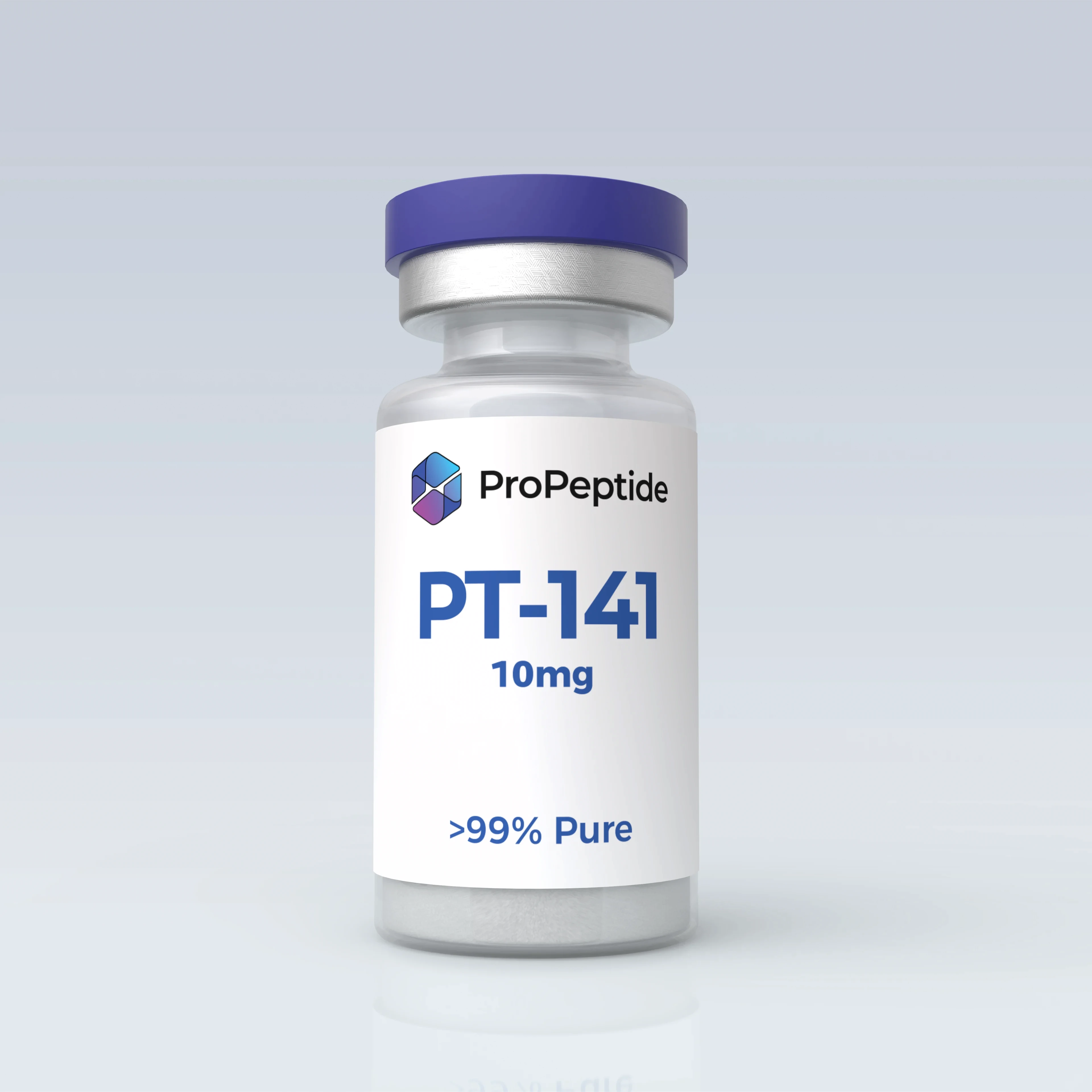
The ProPeptide PT-141 10mg vial holds freeze-dried bremelanotide, a cyclic melanocortin receptor agonist, sealed under a crimp cap and shipped chilled from Dubai by Remy Research for melanocortin receptor studies in the lab. For research use only. Not for human or veterinary use.
- ≥99% Purity
- ProPeptide Brand Standard
- Same-Day Delivery
- Dubai
- Lyophilized Vial
- Research Format
- Cold-Chain Shipped
- +2 to +8°C
- 1x ProPeptide research vial (lyophilized powder)
- Cold-chain insulated packaging
ProPeptide Lyophilized Vial Research Format
SpecsPT-141 10mg Vial
Melanocortin agonist tested in phase 3 trials
AED 190 / vial
Choose your bundle
Minimum order is AED 400
25% off orders of AED 700+ with code KV25 at checkout
Order before 4 PM for same-day Dubai delivery.
UAE delivery: AED 50 below AED 1,000; free from AED 1,000
Specified ≥99% ProPeptide Brand Standard
- Sold by
- Remy Research
- Brand
- ProPeptide
- Manufacturer
- ProPeptide
- Tested by
- Line standard — no independent report
Ships from Dubai
PT-141, bremelanotide and Vyleesi: keeping the names apart
PT-141 was the development code given to a small synthetic peptide that is now known by its nonproprietary name, bremelanotide. It is a ring-shaped (cyclic) seven-residue peptide built on the alpha-melanocyte-stimulating hormone (alpha-MSH) template, which places it in the melanocortin family of signalling molecules.
The three names are often blurred together online, so it helps to separate them. PT-141 is the research code. Bremelanotide is the molecule. Vyleesi is a branded prescription product containing bremelanotide that the U.S. FDA approved in June 2019. Remy Research uses the Vyleesi label and the FDA review file only as official reference sources for the molecule's pharmacology and safety record.
This vial is not Vyleesi and is not a medicine of any kind. It is freeze-dried bremelanotide research material from the ProPeptide line, which Remy Research sells strictly as bench and animal-model material. For research use only. Not for human or veterinary use.
About this vial: format, purity and paperwork
The listing is a single sealed vial of powder. Here is what that format gives a laboratory, and what is and is not documented for it today.
Freeze-dried powder for storage stability
The vial holds 10mg of lyophilised (freeze-dried) bremelanotide under a crimped seal. Peptides keep far better as dry powder than in solution, which is why the vial remains the default way research peptides are stored and shipped. For the chemistry behind that, see the peptide stability and storage guide.
The purity line, and what has been published
ProPeptide states a purity standard of 99% or higher by HPLC for this line. No batch-specific independent report for the PT-141 10mg vial has been published yet, and we will not suggest otherwise. The one PT-141 report currently in our lab results library belongs to the 20mg pen batch, not to this vial.
What a good certificate should show
Two separate questions matter: is the sample pure (an HPLC trace answers that) and is it really bremelanotide (a mass spectrum near 1025.2 answers that). Look too for the lab's name, a test date and a batch code that matches the vial. Each of these items is unpacked in the COA and HPLC purity guide.
Chilled delivery within the UAE
Each parcel is packed to hold 2–8°C in transit, and a Dubai order in before 4 PM reaches you that day. Cut-off times for the other six emirates are on the delivery page.
Vial or pen?
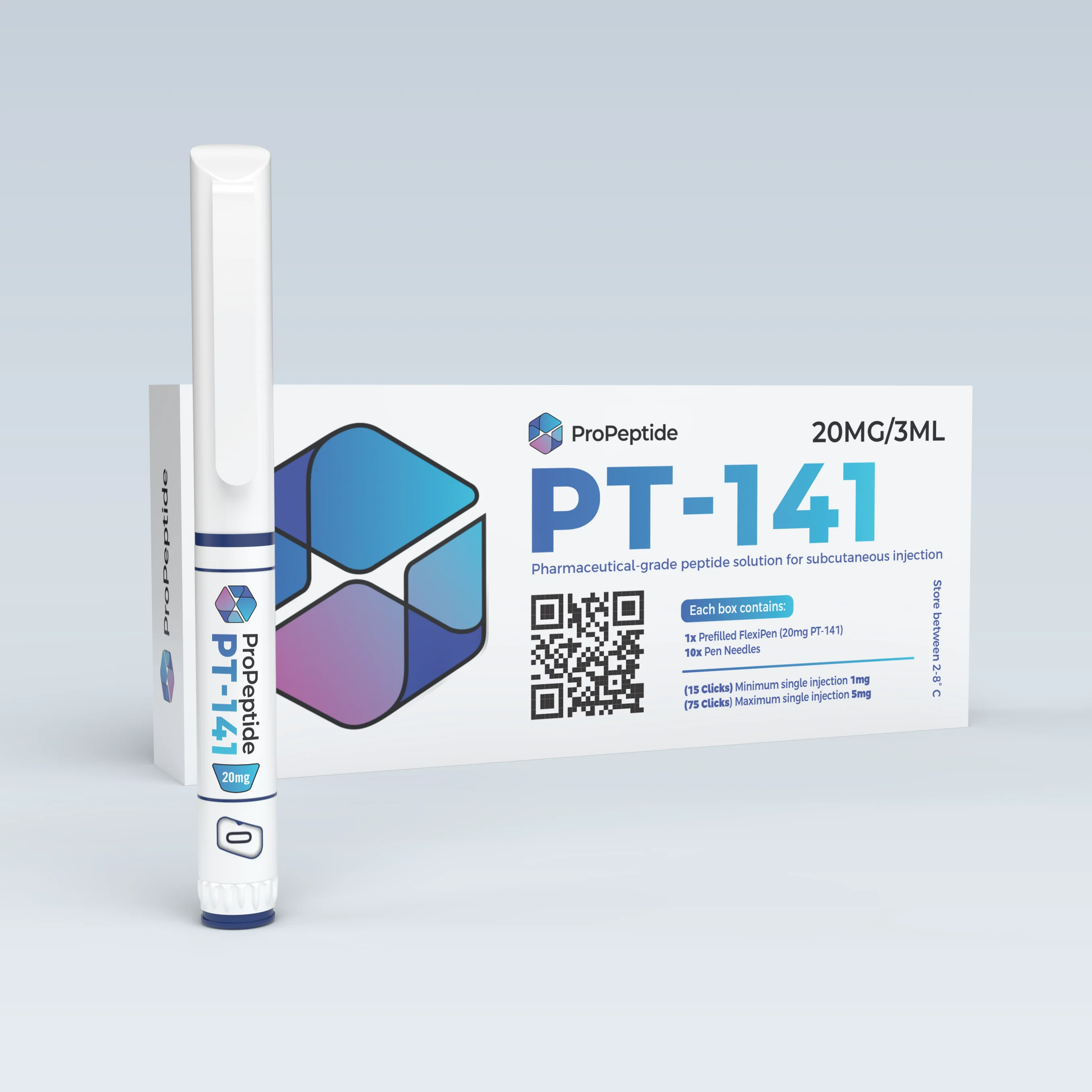
The same peptide is also listed as a PT-141 20mg pen. The vial suits work that starts from dry, sealed material; the pen is a separate, pre-filled format with its own published batch report.
Technical Specifications
| Manufacturer | ProPeptide |
|---|---|
| Compound | PT-141 (Bremelanotide) |
| CAS Number | 189691-06-3 |
| Quantity | 10mg per vial |
| Format | Lyophilized powder, sealed glass vial |
| Purity | Specified ≥99% |
| Molecular Weight | 1,025.2 Da |
| Sequence | Cyclic heptapeptide α-MSH analog |
| Storage | +2 to +8°C lyophilized. |
What the published research covers
Bremelanotide entered the literature as a tool for probing melanocortin circuits in the brain. The points below summarise what published papers and the official U.S. label report. They describe study findings, not effects anyone should expect.
A melanocortin agonist, not a PDE5-type compound
Early development papers, including Molinoff and colleagues in 2003, describe agonist activity at melanocortin receptors including MC3R and MC4R, which are tied mainly to central nervous system signalling. That sets the molecule apart from sildenafil-class drugs, which act on the nitric oxide and PDE5 vascular pathway.
MC1R and pigmentation
The Vyleesi label adds evidence of activity at MC1R, the receptor on pigment-producing skin cells, and lists increased focal pigmentation as an observed effect. So the receptor picture is broad rather than selective.
How the human studies progressed
The clinical record moved in three steps: small placebo-controlled intranasal studies around 2004, a randomized placebo-controlled trial in premenopausal women published in 2016 that compared several exposure levels, and two phase 3 RECONNECT trials in premenopausal women with hypoactive sexual desire disorder, published in 2019. Those trials reported changes on validated questionnaire endpoints under controlled conditions. They concern the approved product in one defined patient group.
Recorded tolerability signals
The safety observations that recur across the primary studies and the label are short-lived rises in blood pressure (examined with ambulatory monitoring in a 2017 study), nausea, and focal darkening of the skin. For the approved product, the label gives a terminal half-life near 2.7 hours, with blood levels peaking around the one-hour mark.
A related compound: Melanotan II
Bremelanotide is structurally close to Melanotan II and is often described as a metabolite of it, but the two have different receptor emphasis and very different evidence trails. Our PT-141 vs Melanotan II comparison sets out the differences, and the PT-141 melanocortin research review covers the full literature with references.
For research purposes only. Not for human consumption.
Frequently Asked Questions
Where can I buy PT-141 in Dubai?
Remy Research supplies this ProPeptide PT-141 10mg vial from Dubai as research-use-only material. Inside Dubai, anything ordered by 4 PM goes out for same-day arrival, most often within 4 hours. Elsewhere in the UAE, ordering before noon means next-day arrival; after noon, allow up to two days. Outside Dubai, a Saturday order lands on Monday, as there are no Sunday deliveries there. The vial travels chilled at 2–8°C throughout. Charges are listed on the delivery page.
Is this vial the same thing as Vyleesi?
No. Vyleesi is a U.S. prescription product containing bremelanotide, approved by the FDA in 2019. This vial contains bremelanotide as freeze-dried laboratory material. It is not a licensed medicine, and it is supplied for in-vitro and animal-model research only.
What kind of molecule is PT-141?
It is bremelanotide under its old development code: a cyclic seven-residue peptide modelled on alpha-MSH. Published work classes it as a melanocortin receptor agonist, with reported activity at MC3R and MC4R and, per the official U.S. label, at MC1R.
Is there a lab report for this vial?
Not yet. The ProPeptide line is made to a stated HPLC purity standard of 99% or higher, but no batch-specific report for the 10mg vial has been published. The PT-141 report currently in our lab results library covers the 20mg pen batch only.
How is PT-141 different from Melanotan II?
They share melanocortin biology and a similar structure, but Melanotan II is broadly active across MC1R, MC3R, MC4R and MC5R and its evidence rests on preclinical and observational reports, while bremelanotide has controlled trials and official label material. See PT-141 vs Melanotan II.
What safety signals appear in the published record?
The primary studies and the U.S. label consistently report transient increases in blood pressure, nausea and focal hyperpigmentation linked to MC1R activity. These come from the approved product in clinical settings and are listed here as literature facts only.
How should the sealed vial be kept?
Refrigerate it at 2–8°C on arrival and keep it out of light while sealed. Transit uses the same chilled range, so it should go straight from the box into the fridge.