BPC-157 10mg in the UAE: Research, Quality and Buying Guide
BPC-157 is one of the most discussed peptides in preclinical repair research, and "BPC-157 10mg" is the format most commonly stocked by UAE research suppliers. This guide covers what the compound is, what current evidence actually shows, how to evaluate quality before ordering, and what UAE-based labs should expect in terms of pricing, delivery and regulatory compliance.
Update History ▾
Key Takeaways
- BPC-157 is a synthetic pentadecapeptide - a 15-amino-acid research peptide derived from a protein found in human gastric juice. The "10mg" on a vial label refers to the total lyophilized peptide content for in-vitro work, not a dosing recommendation for humans or animals.
- Evidence for BPC-157 comes mainly from animal studies and in-vitro models focused on wound healing, gut health and tissue repair. Only a handful of small, uncontrolled human reports exist. BPC-157 is not FDA-approved for any medical use, and no regulatory body has granted it approved medical indications as of 2026.
- In the UAE, BPC-157 10mg vials are legally sold only for laboratory research, not for human or veterinary use. Remy Research operates strictly within this "for research use only" boundary.
- Before buying, researchers should verify supplier transparency, HPLC purity standards (≥98%), a batch-specific Certificate of Analysis, proper storage and cold-chain logistics, and realistic delivery timelines and costs within the UAE.
- For a practical next step, visit the BPC-157 10mg vial product page and the Lab Results/COA library to review documentation before ordering.
What is BPC-157 10mg, in plain terms?
BPC-157 - short for body protection compound 157 - is a stable gastric pentadecapeptide composed of 15 amino acids with the sequence Gly-Glu-Pro-Pro-Pro-Gly-Lys-Pro-Ala-Asp-Asp-Ala-Gly-Leu-Val. It is a synthetic pentadecapeptide originally derived from a protein found in human gastric juice, and has become one of the most widely referenced peptides in preclinical repair science.
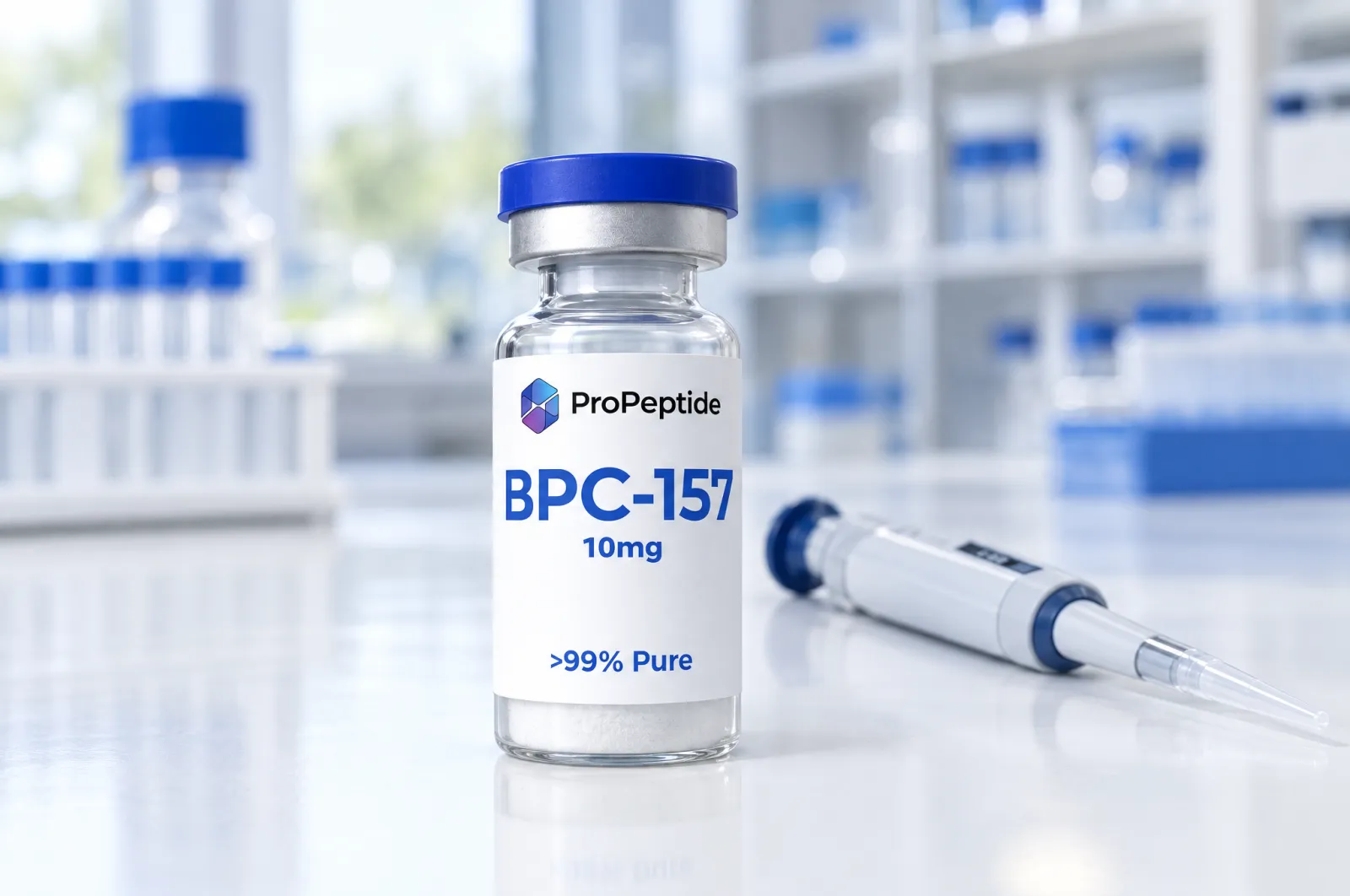
When a vial is labelled "10mg," it means the vial contains 10 milligrams of lyophilized BPC-157 powder in a sealed glass container. This is a statement about net peptide content, not a suggested human dose or cycle length. BPC-157 typically arrives as a lyophilized powder in 5 mg or 10 mg vials, and the 10mg format is standard across most research suppliers.
The main research themes around this gastric pentadecapeptide include soft tissue healing, wound healing, gastrointestinal protection, angiogenesis, nitric oxide modulation and cellular signaling. As of October 2026, BPC-157 is not an approved drug in any jurisdiction, lacks robust human dosing data, and is classified strictly as a research chemical in the Remy Research catalogue.
UAE-based labs searching for "BPC-157 10mg" are typically looking for a single-vial format that provides enough material for multiple experimental runs at a manageable cost.
How does BPC-157 work in current research models?
The mechanisms described below come from rodent and in-vitro studies. They are proposed pathways, not confirmed human pharmacology.
Key mechanistic axes investigated in preclinical BPC-157 research include:
- Nitric oxide modulation. BPC-157 modulates nitric oxide levels to aid tissue repair by upregulating endothelial nitric oxide synthase (eNOS) and influencing the Src-caveolin-1-eNOS pathway. In isolated rat aorta experiments, BPC-157 produced concentration-dependent vasodilation that was blocked by NOS inhibitors.
- Angiogenesis and VEGF signaling. The peptide promotes angiogenesis and vascular repair through upregulation of VEGFR2, facilitating endothelial cell proliferation and new blood vessel formation. In one rat venous occlusion model, BPC-157 increased vascular interconnections and branching by more than 60% compared to controls.
- FAK-paxillin signaling and cell migration. This pathway is implicated in tissue repair models involving tendon fibroblasts and ligament cells, where BPC-157 enhances cellular signaling involved in wound healing and fibroblast activity.
- Oxidative stress reduction. BPC-157 reduces markers such as malondialdehyde in various tissues subjected to ischemia-reperfusion injury, supporting cell survival under stress.
There is also emerging investigation into nervous-system effects and neural tissue recovery - BPC-157 shows potential in neural tissue recovery in early models - but this data is limited and comes mostly from preclinical settings.
These mechanisms remain hypotheses grounded in animal and cell data. Human translational gaps are substantial: there is no full pharmacokinetic profile in people, no validated dose-response curve, and limited long-term safety data.
What does the evidence say about wound healing and tissue repair?
BPC-157 is widely studied as a repair peptide in non-clinical models, with particular focus on musculoskeletal injuries and general wound healing.
Typical preclinical findings reported in the literature include:
- BPC-157 accelerates healing of tendons and ligaments in rat rupture and transection models, with improved fibroblast migration, collagen production and tendon outgrowth.
- It enhances collagen synthesis and fibroblast activity around injury sites, leading to better-organized tissue architecture during repair.
- BPC-157 promotes angiogenesis for new blood vessel growth in wound beds, which supports nutrient delivery to healing tissue.
- Some animal studies report faster functional recovery - for example, improved load-bearing strength in healing tendons and restored muscle contractility after acute injury.
- In bone models, including segmental bone defect and autologous cortical bone implantation experiments, researchers have observed an osteogenic effect and promoting effect on bone marrow-derived cell activity.
In the literature, common dosing for tendon recovery in rodent models is reported at 250–500 mcg daily for 4–6 weeks, though these numbers reflect animal study protocols, not human recommendations. For broader context on reported dosage ranges, see the BPC-157 dosage literature review.
BPC-157 has no reported toxicity in animal studies at the doses tested, which is notable but does not substitute for controlled human safety trials.
Key limitations remain significant: there are no large randomized human trials, potential publication bias toward positive findings exists (much of the data originates from a single research group), and tissue architecture in rodents is not directly equivalent to human tendons, ligaments and muscle.
Remy Research's BPC-157 10mg vials serve as tools for in-vitro or ex-vivo wound healing research - cell cultures, tissue samples, migration assays - and are explicitly not for human or veterinary treatment use.
What's known about BPC-157 and gut health?
BPC-157's origin as a stable gastric pentadecapeptide BPC fragment from gastric juice makes it a natural target for gastrointestinal tract and gut health research.
Representative preclinical findings include:
- Protection against experimentally induced gastric ulcers in rodent models
- Attenuation of chemically triggered colitis and reduced inflammation in GI tract tissues
- Improved mucosal regeneration and barrier integrity
- BPC-157 shows significant gut healing effects in animal studies, with consistent findings across multiple gastrointestinal protection models
A small number of early-phase or uncontrolled human reports exist - including pilot study data on ulcerative colitis and interstitial cystitis - but these are small in sample size, lack robust controls, and have not established clinical dosing, efficacy, or safety. No serious adverse events were reported in human studies, but that reflects limited exposure rather than proven safety.
In July 2026, the US Pharmacy Compounding Advisory Committee (PCAC) voted 8–6 to recommend BPC-157 for the 503A Bulks List for compounding in ulcerative colitis. This vote was non-binding and reflects ongoing regulatory uncertainty rather than approval. The FDA staff review noted that the existing human data was too limited - short duration, small samples, exploratory doses - to draw firm conclusions.
BPC-157 remains a research peptide. Any references to gut health in this article are strictly about laboratory and preclinical investigation, not supplement or therapy advice.
What exactly does "10mg vial" mean for lab work?
"BPC-157 10mg" denotes the quantity of peptide supplied in one vial. It affects experimental design - how many plates you can run, what concentration ranges are feasible - but is not a usage guideline for people or animals.
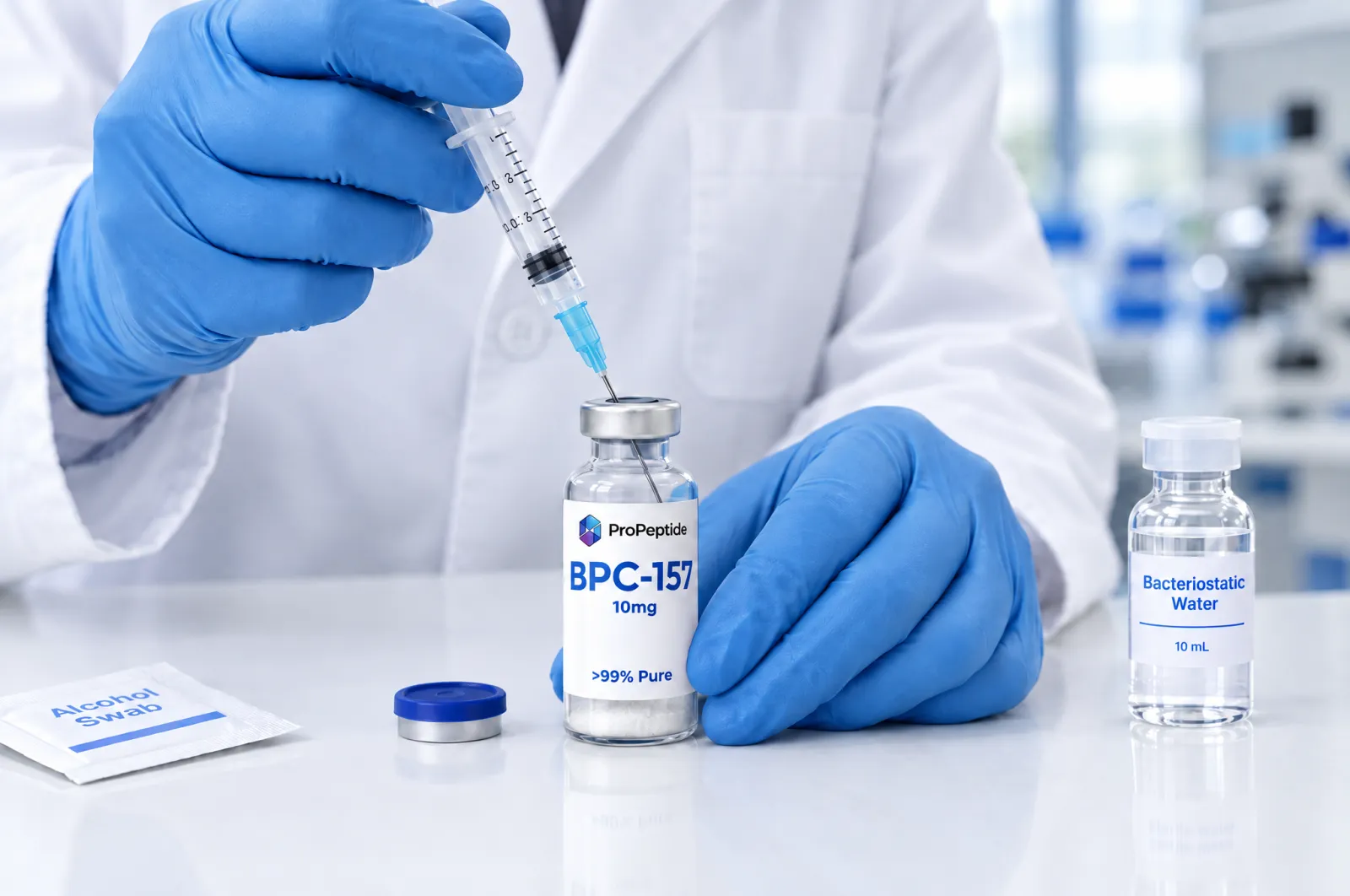
The physical format typically available in the UAE research market is a sealed glass vial containing 10mg of lyophilized (freeze-dried) BPC-157 powder, with no added fillers, intended to be reconstituted with an appropriate solvent by the lab. Bacteriostatic water is a common reconstitution solvent and is available as an add-on from most suppliers.
Core specifications from the Remy Research product page:
| Specification | Detail |
|---|---|
| CAS Number | 137525-51-0 |
| Molecular Weight | ~1419.5 g/mol |
| Structure | Linear (no disulfide bridges) |
| Stated Purity | ≥99% HPLC (ProPeptide line standard) |
| Storage | +2 to +8°C |
| Shelf Life | 24 months (unopened) |
A single 10mg vial can be reconstituted into different stock solutions depending on experimental needs. For example, adding 1 mL of solvent produces a 10 mg/mL stock; adding 10 mL produces 1 mg/mL. The lab then dilutes further based on protocol requirements.
For reference, doses reported in the animal literature typically range from 10 ng/kg to 10 μg/kg for systemic effects. Standard injectable BPC-157 dose reported in the literature is 250–500 mcg twice daily; oral BPC-157 dose is 500 mcg to 1 mg once daily for oral dosing models; and for a 70 kg subject, a commonly cited figure is 280–350 mcg per injection. These are reported experimental parameters, not recommendations from Remy Research. For a full overview, see the BPC-157 healing research review.
The 10mg size is often chosen because it balances experimental flexibility (multiple runs, different concentrations) with manageable cost per vial for small and mid-sized labs in the UAE.
How should labs think about cycle length and experimental timelines?
On consumer forums, "cycle length" typically refers to human dosing schedules. In a research context, it maps to experiment duration and sampling schedules rather than personal use.
A BPC-157 10mg vial can support varying experimental timelines:
- Short-term assays (24–72 hours): Cell viability, signaling pathway activation, or cytotoxicity screens
- Medium-term protocols (1–4 weeks): Wound healing scratch assays, cell migration models, tendon healing explants
- Longer organ or tissue models: Ex-vivo tissue maintenance studies extending beyond four weeks, depending on model and institutional SOPs
Once reconstituted, solutions are typically kept refrigerated at 2–8°C and used within lab-defined stability windows. Consistent storage and minimizing freeze-thaw cycles are more important than any arbitrary "cycle" timeline.
Continuous year-round exposure models are rarely necessary for in-vitro work. Labs should design BPC-157 exposure schedules based on specific research questions and ethical approval where relevant.
Remy Research does not provide advice on human cycle length. Any such discussions belong in a clinical or regulatory context, not in a research-chemical buying guide.
Quality, purity and COA: what should UAE researchers look for?
Peptide authenticity and purity are central to reproducible BPC-157 data, especially when interpreting wound healing and gut health results. Certificates of Analysis are crucial for research-grade peptides, and research-grade peptides require published batch verification via COA.
Here is what to request from any supplier:
- Batch-specific COA with date, task number and lot identification. A Certificate of Analysis verifies the purity of BPC-157 and COAs ensure that BPC-157 meets specified quality standards. COAs also provide traceability for BPC-157 sourcing and quality.
- HPLC purity of ≥98% or higher. BPC-157's purity should ideally be confirmed by HPLC to be ≥98%.
- Mass spectrometry identity confirmation (LC-MS or MALDI-MS). Analyzing the purity and identity of BPC-157 involves both HPLC and LC-MS methods - purity alone does not confirm the correct sequence.
- Net peptide content and salt form (free base vs. acetate vs. TFA)
- Endotoxin and microbial data where available. Endotoxin testing is crucial for research involving cellular models, as contaminants can confound results.
- Named independent testing lab. Independent analytical testing increases the reliability of BPC-157 sourcing. Researchers must verify third-party testing for BPC-157 peptides.
Remy Research publishes Janoshik Analytical reports for many peptide products, with verification keys that link to the laboratory's verification site. For the ProPeptide BPC-157 10mg vial specifically, some lots currently rely on line-standard HPLC specs rather than a batch-posted Janoshik COA. Researchers can request lot-specific documentation by contacting support. To understand the verification process, see the guide on how to verify a Janoshik COA.
HPLC purity percentage alone does not confirm correct sequence. A sample could show 99% purity by HPLC but contain the wrong peptide entirely. LC-MS or related techniques are the standard for identity verification.
Record batch numbers in lab notebooks, verify COAs directly on the testing lab's website when verification keys are provided, and ask Remy Research support if you need documentation for a specific BPC-157 10mg lot.
Storage, stability and cold-chain handling for BPC-157 10mg
Peptides like BPC-157 are sensitive biomolecules. Proper storage is critical to maintain purity and experimental reliability. Suppliers should provide clear storage and handling instructions to maintain stability.
Basic storage expectations from the product specification:
- Keep lyophilized vials at +2 to +8°C
- Protect from light and moisture
- Typical shelf life: 24 months when stored unopened under specified conditions
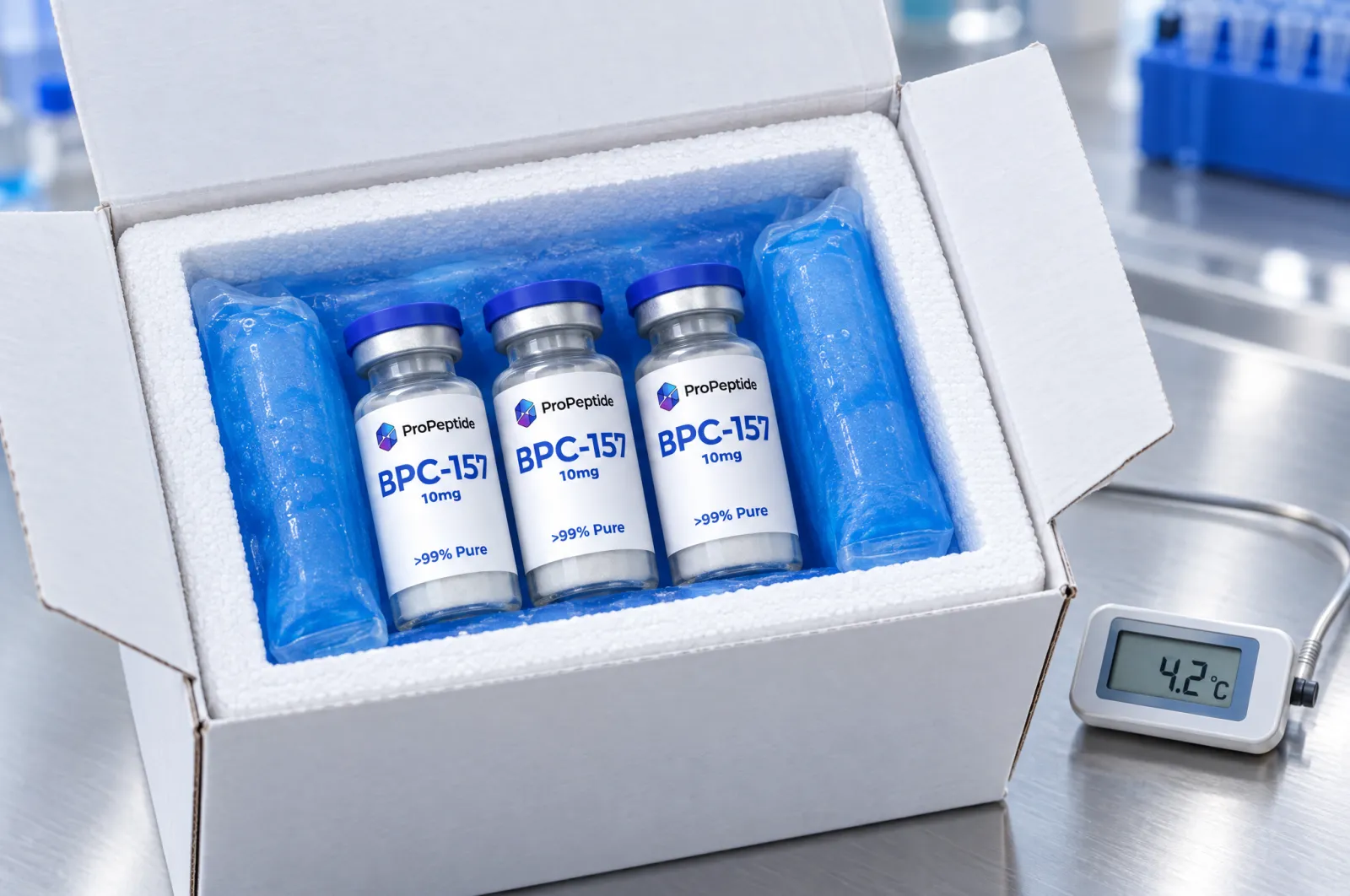
Remy Research uses cold-chain packaging for all UAE shipments - insulated materials and cooling elements designed to hold 2–8°C during transit, with a live tracking link once dispatched. Details are available on the UAE delivery page.
For internal lab handling:
- Allow vials to reach fridge temperature before opening to avoid condensation
- Minimize freeze-thaw cycles after reconstitution
- Follow local SOPs for solution stability and disposal
- For extended guidance, see the peptide stability and storage guide
Principal investigators should document storage conditions - arrival temperature if monitored, fridge logs, date of first opening - in methods sections to strengthen reproducibility and peer review confidence.
Buying BPC-157 10mg in the UAE: price, delivery and compliance
This section is a practical guide for UAE labs and research groups comparing suppliers, with Remy Research used as a concrete example.
Pricing
| Quantity | Price per Vial | Notes |
|---|---|---|
| 1 vial | AED 220 | Single unit |
| 2 vials | AED 200 | Bundle discount |
| 5 vials | AED 180 | Volume discount |
| Bacteriostatic water add-on | AED 50 | Optional |
Minimum order value is AED 400. View the full product listing on the BPC-157 10mg vial page.
UAE Delivery Logistics
- Dubai same-day delivery: Orders confirmed before 4:00 PM GST (covers Dubai Marina, JLT, Downtown, DIFC, Business Bay, JVC, Al Barsha, Jumeirah)
- Other emirates (Abu Dhabi, Sharjah, Ajman, UAQ, RAK, Fujairah): Order before 12:00 PM GST for next-day delivery; orders placed after 12:00 PM typically arrive within two days
- Weekend restrictions: Saturday delivery outside Dubai defers to Monday; no Sunday delivery outside Dubai
- Shipping cost: AED 50 for orders under AED 1,000; free for orders AED 1,000+
- Payment: Secure payment link sent within 30 minutes (09:00–22:00 GST); orders ship once payment clears
- All shipments use cold-chain packaging to maintain 2–8°C
Compliance
BPC-157 should not be marketed with medical or therapeutic claims. Regulatory bodies like the FDA restrict BPC-157 to research and laboratory use only, and UAE authorities (MoHAP, EDE) treat it as an unapproved pharmaceutical if supplied for human use. The World Anti Doping Agency (WADA) lists BPC-157 under S0 prohibited substances.
All BPC-157 10mg products from Remy Research are sold strictly "for laboratory research use only" - not as medicines, supplements or veterinary products. Buyers should ensure institutional compliance and ethics approvals for any planned work.
How Remy Research compares to other UAE peptide suppliers
The UAE peptide market includes multiple research-chemical distributors. Labs should evaluate them on documentation, logistics, and transparency rather than marketing claims alone.
Differentiators Remy Research focuses on:
- Public Lab Results library with verifiable Janoshik links for published batches
- Cold-chain shipping standards within the UAE
- Clear product specifications (sequence, MW, CAS, purity)
- Explicit "research use only" labelling on all products
Other operators in the region - clinic-only pharmacies, international mail-order research houses - may not offer the same combination of local logistics and verifiable COAs. That said, labs should always compare documentation quality rather than taking any single supplier at face value.
Related repair-focused peptides
Remy Research positions BPC-157 alongside other peptides in its catalogue for different in-vitro models:
- TB-500 - thymosin beta-4 fragment studied for actin-binding and cell migration
- BPC-157 + TB-500 blend - investigated for potential synergy in tissue repair models
- GHK-Cu - a copper peptide explored in applied physiology for skin remodeling and collagen production contexts
These represent different approaches to investigating soft tissue healing, each with distinct mechanisms and evidence profiles.
For complementary reading, see the BPC-157 Dubai research vial guide and the healing peptides research overview.
How to get started: from literature review to ordering a BPC-157 10mg vial
If you are a UAE-based scientist planning a BPC-157 project for the first time, here is a practical roadmap.
- Conduct a literature review. Start with recent BPC-157 wound healing and gastrointestinal protection papers. The MDPI 2026 review on BPC-157 in rodent ischemia-reperfusion injury is a useful starting point for mechanistic context. Published scientific reports from groups like the Polish Physiological Society (Physiology Paris meetings) and current pharmaceutical design or current neuropharmacology journals cover adjacent CNS and molecular medicine angles.
- Define a precise research question and model system. Whether you are studying tendon healing, ligament healing, blood vessel formation, up regulation of growth hormone receptor expression, chronic inflammation, or gastrointestinal protection - your model dictates everything downstream.
- Calculate the amount and concentration range needed. Map your target concentrations (e.g., 1 μg/mL, 10 μg/mL for cell survival assays) back to how many 10mg vials you require. Consider the number of replicates, time points, and controls.
- Cross-check product specs against published methods. Verify that the peptide sequence, purity and storage conditions match what was used in the papers you plan to replicate or extend.
- Order from Remy Research. Visit the BPC-157 10mg vial product page, review available documentation, confirm delivery timeline for your emirate, and contact support if you need clarification on batch documentation before purchase.
Design your experiment, document your methods, and keep research and clinical use clearly separated.
Our Research Standards
Product, price and delivery facts on this page match the Remy Research catalogue and delivery terms as checked on October 17, 2026, and the cited sources were checked on the same date. Animal and cell findings are kept separate from the small human record. No therapeutic, human-use, or veterinary-use claim is made here. Read our editorial policy →
Frequently Asked Questions
These questions address practical and regulatory points UAE researchers commonly raise. Each answer is written to stand alone.
Is BPC-157 legal to buy for research in the UAE?
BPC-157 is sold in the UAE as a research chemical for in-vitro and laboratory use, not as an approved medicine or supplement. Legality depends on using it within this research-only context and complying with institutional and national regulations. Remy Research supplies BPC-157 10mg strictly under "for research use only, not for human or veterinary use" terms, and buyers are responsible for ensuring appropriate approvals and oversight. Researchers should consult their institutional review boards, procurement teams, or legal departments if unsure about how peptide regulations apply to their specific project.
What is the difference between a 10mg vial and higher-dose pens or blends?
A 10mg vial generally contains pure lyophilized BPC-157 powder intended for flexible dilution in research settings, whereas pens and multi-peptide blends are often pre-diluted delivery formats aimed at clinical or consumer markets. Remy Research's wider catalogue also lists other BPC-157 formats - including a 20mg pen and combination products with TB-500 - for research into comparative mechanistic effects. Regardless of format, all BPC-157 sold by Remy Research is for research use only. The 10mg vial is usually the most controllable option for rigorous in-vitro protocol design.
Does ≥99% HPLC purity mean the BPC-157 is pharmaceutical grade?
No. While ≥99% HPLC purity is a strong indicator of low levels of related impurities, it does not automatically make a product "pharmaceutical grade." That is a regulated designation involving GMP manufacturing, validated methods, and regulatory toxicology oversight. HPLC alone does not prove the peptide's sequence is correct - identity confirmation via LC-MS or MS/MS is important to distinguish true BPC-157 from lookalike fragments. Remy Research reports purity according to supplier standards and, where available, publishes third-party COAs. Always check which tests were performed before equating a research peptide with a clinical-grade product.
Are there known side effects or safety concerns with BPC-157?
In the limited human data available, common side effects include headaches and injection site redness at the injection site. No serious adverse events were reported in human studies, though these studies were small and short-duration. BPC-157 should not be used by individuals with cancer, because its ability to promote angiogenesis - new blood vessel formation - could theoretically support tumour growth. This is a precautionary concern based on mechanism, not a clinically validated finding. BPC-157 is a novel therapy candidate still far from established clinical practice or clinical use, and alternative therapies with established safety profiles should always be discussed with qualified medical professionals for any therapeutic potential application.
Where can I find more detailed BPC-157 research summaries?
For an in-depth look at preclinical data and mechanisms, see the BPC-157 healing research peptide review. For UAE-specific market categories, sourcing checks and local supplier context, read the BPC-157 Dubai research vial guide. For primary literature, search PubMed and Google Scholar using terms like "stable gastric pentadecapeptide BPC" or "body protection compound 157" combined with your model system (e.g., tendon, oral dosing, subcutaneous injection, bone marrow). For rigorous lab work, peer-reviewed sources and transparent COAs should always carry more weight than secondary blogs or forum narratives. All patients and systemic goals discussions in online forums should be evaluated critically - they often blur the line between research and self-experimentation.
Sources and further reading
Remy Research resources
- BPC-157 10mg Vial - Product Page
- BPC-157 Healing Research Peptide - Full Review
- BPC-157 Dubai Research Vial - UAE Guide
- Lab Results - Published COA Library
- Peptide Delivery in Dubai, Abu Dhabi & the UAE
External scientific references
- Hsieh MJ, et al. "Modulatory effects of BPC 157 on vasomotor tone and the activation of Src-Caveolin-1-endothelial nitric oxide synthase pathway." Scientific Reports, 2020. pmc.ncbi.nlm.nih.gov/articles/PMC7555539
- Amic F, et al. "Bypassing major venous occlusion and duodenal lesions in rats, and therapy with the stable gastric pentadecapeptide BPC 157, L-NAME and L-arginine." World Journal of Gastroenterology, 2018. pmc.ncbi.nlm.nih.gov/articles/PMC6305534
- "BPC 157 in Rodent Ischemia–Reperfusion Injury: A Critical Review of Preclinical Evidence." International Journal of Molecular Sciences (MDPI), 2026. mdpi.com/1422-0067/27/18/8344
- FDA Pharmacy Compounding Advisory Committee Background Document, July 2026. fda.gov/media/193343/download
- Associated Press, "FDA panel narrowly backs unapproved peptide drugs favored by RFK Jr. and wellness influencers," July 2026. apnews.com
These sources support a research-focused understanding of BPC-157 10mg. This article is not intended as medical, therapeutic or dosing advice. All official journal citations should be verified against current databases before use in grant applications or published methods.
For current stock and price, use the ProPeptide BPC-157 10mg vial page. Batch reports are in the lab results library; for editorial standards, continue to the research standards page.